



Canada has officially taken a major step toward strengthening its immigration system. On March 26, 2026, Bill C-12 received Royal Assent, marking a significant shift in how immigration and asylum applications are handled across the country.
This new law focuses on improving efficiency, tightening security, and ensuring fairness—while also addressing long-standing issues such as processing delays and misuse of asylum pathways.
In this blog, we’ll explore the 4 key reform areas of Bill C-12, what they mean in practice, and how they will impact future applicants.
What is Bill C-12 and Why It Matters?
Bill C-12 is part of Canada’s ongoing effort to modernize its immigration system under Immigration, Refugees and Citizenship Canada (IRCC).
Over the past few years, Canada has experienced a surge in immigration and asylum applications, putting pressure on existing systems. This law aims to solve those challenges while maintaining Canada’s reputation as a welcoming destination.
The goal is not to reduce immigration—but to ensure that the system is efficient, fair, and protected from misuse.
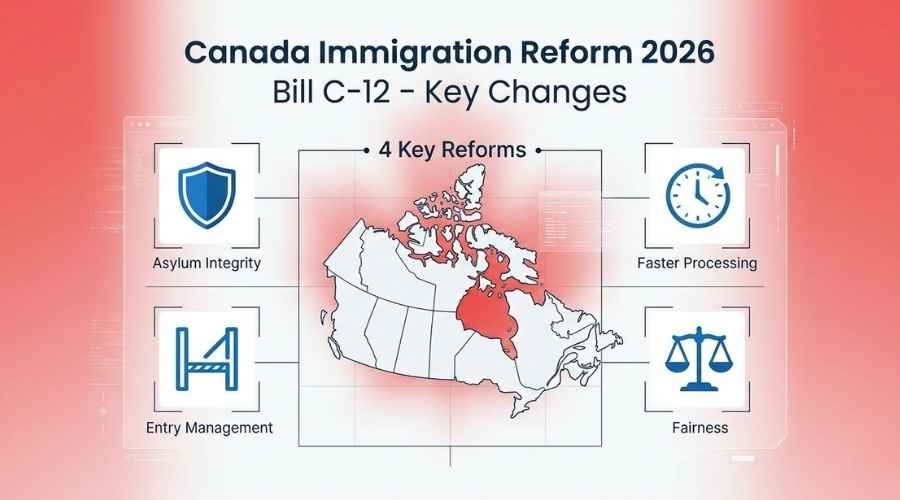
The 4 Key Areas of Reform Under Bill C-12
1. Stronger Asylum System Integrity
Bill C-12 introduces stricter measures to protect Canada’s asylum system from misuse and fraudulent claims. Authorities will now have better tools to quickly identify applications that do not meet genuine refugee criteria, helping prevent system abuse.
At the same time, the law ensures that legitimate asylum seekers are not negatively affected. By reducing false or weak claims, genuine refugees can receive faster decisions and better support upon arrival.
This change is expected to significantly reduce backlogs in asylum processing, creating a more balanced and effective system that prioritizes those truly in need of protection.
2. Faster Processing and Reduced Backlogs
One of the biggest improvements under Bill C-12 is the focus on speeding up immigration processing times. Canada has faced delays across multiple visa categories, and this law introduces modern solutions to address those issues.
Through increased digitization, automation, and better case management systems, applications will be processed more efficiently. This means fewer delays for study permits, work permits, and permanent residency applications.
Additionally, resources within IRCC are expected to be better allocated, ensuring that high-demand categories are handled quickly while maintaining accuracy and fairness in decision-making.
3. Enhanced Border and Entry Management
The new law strengthens Canada’s border control measures to ensure that all entries into the country are properly monitored and regulated. This includes improved coordination between immigration authorities and border enforcement agencies like the Canada Border Services Agency (CBSA).
With enhanced screening procedures, individuals entering Canada will undergo more thorough checks to verify their purpose of travel and eligibility. This reduces the risk of unauthorized entry or misuse of temporary visas.
At the same time, these improvements help maintain national security while ensuring that genuine travelers, students, and workers can enter Canada smoothly without unnecessary delays.
4. Fairness and Accountability in Decision-Making
Bill C-12 places strong emphasis on making immigration decisions more transparent and consistent. Applicants will benefit from clearer communication regarding application outcomes and reasons for approval or refusal.
The law also introduces improvements in how appeals and reviews are handled, ensuring that applicants have fair opportunities to challenge decisions if necessary. This increases trust in the overall system.
By standardizing decision-making processes, Canada aims to reduce inconsistencies and ensure that every applicant is treated equally, regardless of their country of origin or application type.
What This Means for Immigrants and Applicants
1. Stricter Screening but Faster Decisions
Applicants should expect more detailed background checks and verification processes, especially in categories prone to misuse. However, these stricter checks are balanced with faster processing systems that reduce waiting times.
This means genuine applicants will benefit the most, as their applications will move through the system more quickly and with fewer delays compared to previous years.
Overall, the process becomes more competitive—but also more efficient for those who are well-prepared.
2. Higher Standards for Genuine Applicants
Canada is clearly shifting toward prioritizing applicants who have clear intentions and strong documentation. This includes students with relevant academic plans, workers with valid job offers, and immigrants with genuine long-term goals.
Incomplete, inconsistent, or weak applications are more likely to face rejection under the new system. This makes preparation and accuracy more important than ever before.
For serious applicants, however, these changes improve overall approval chances by reducing competition from non-genuine cases.
3. Reduced Misuse of Immigration Pathways
The new law aims to close loopholes that were previously used to misuse asylum or temporary visa programs. This ensures that immigration pathways are used for their intended purposes only.
By limiting misuse, Canada can better manage application volumes and provide faster services to those who genuinely qualify.
This also helps maintain the integrity and global reputation of Canada’s immigration system.
How This Impacts Students and Workers
Although Bill C-12 mainly targets system efficiency and asylum reforms, its impact extends to international students and skilled workers.
Students may experience faster visa decisions but should be prepared for stricter documentation and credibility checks. Clear study plans and financial proof will be essential.
Similarly, workers and permanent residence applicants may benefit from reduced processing times, but only if their applications meet all eligibility criteria accurately and honestly.
Why Canada Introduced Bill C-12
There are several reasons behind this major reform:
- A sharp increase in immigration and asylum applications in recent years
- Growing backlogs causing delays across multiple visa categories
- Concerns about misuse of refugee and temporary visa systems
- The need to maintain public trust and system transparency
Ultimately, Canada aims to create a system that is both welcoming and well-controlled.
What Applicants Should Do Now
1. Prepare Strong Documentation
Make sure all documents—financial, academic, and personal—are accurate, complete, and verifiable. Even small inconsistencies can lead to delays or refusals under stricter rules.
2. Apply as Early as Possible
With high application volumes, early submission remains critical. Applying well in advance gives you enough time to handle unexpected delays or additional document requests.
3. Be Honest and Transparent
Providing truthful and consistent information is now more important than ever. Misrepresentation can lead to serious consequences, including bans from applying.
4. Stay Updated with Policy Changes
Immigration policies continue to evolve, so staying informed through official IRCC updates or professional advisors is essential for success.
Final Thoughts
Bill C-12 marks a major transformation in Canada’s immigration system in 2026. By focusing on integrity, efficiency, and fairness, the government aims to create a system that benefits genuine applicants while preventing misuse.
For those planning to move to Canada, the opportunity is still strong—but preparation is now the key to success.
Canada remains one of the world’s top destinations for students, workers, and immigrants—but in 2026, only well-prepared and genuine applicants will truly benefit from these opportunities.