


Loading...
Hi, How Can We Help You?

Author Archives: jony

November 30, 2024

In today’s competitive world, entrepreneurs often need quick access to global markets to expand their businesses, attend important meetings, or establish international operations. Fast-track business visa programs are tailored to meet these needs, offering entrepreneurs expedited processing and simplified requirements. Here’s a guide to some of the top fast-track business visa options for entrepreneurs in 2024.

1. United States: E-2 Treaty Investor Visa

Highlights:

  • For entrepreneurs from countries with a treaty of commerce with the U.S.
  • Requires a substantial investment in a U.S. business.
  • Quick processing through premium services.

Eligibility Requirements:

  • Be a national of a treaty country.
  • Invest a significant amount in a new or existing U.S. enterprise.
  • Show the business will generate enough income to support the investor and their family.

Processing Time:

  • 2–4 weeks (expedited).

Benefits:

  • Renewable visa.
  • Spouse can work in the U.S., and children can study.

2. Canada: Start-Up Visa Program

Highlights:

  • For innovative entrepreneurs who wish to establish a business in Canada.
  • Requires a letter of support from a designated organization.

Eligibility Requirements:

  • A qualifying business idea.
  • Commitment from a designated venture capital fund, angel investor, or business incubator.
  • Meet language proficiency and settlement fund requirements.

Processing Time:

  • 12–16 months (but expedited for priority cases).

Benefits:

  • Permanent residence pathway.
  • Family inclusion.

3. United Kingdom: Innovator Visa

Highlights:

  • For entrepreneurs with innovative business ideas approved by an endorsing body.
  • Suitable for scaling new businesses in the UK.

Eligibility Requirements:

  • Business idea must be innovative, viable, and scalable.
  • Endorsement from a UK endorsing body.
  • Minimum investment of £50,000 (if required by the business plan).

Processing Time:

  • 3–8 weeks.

Benefits:

  • Pathway to settlement (Indefinite Leave to Remain).
  • Spouse and children can accompany and work/study in the UK.

4. Australia: Business Innovation and Investment (Provisional) Visa (Subclass 188)

Highlights:

  • For entrepreneurs and investors interested in starting or managing a business in Australia.
  • Includes fast-track options for certain streams.

Eligibility Requirements:

  • Nomination by an Australian state/territory government.
  • Minimum business turnover or investment threshold.
  • Meet health and character requirements.

Processing Time:

  • 2–3 months (priority processing for certain cases).

Benefits:

  • Pathway to permanent residence (Subclass 888).
  • Access to Australia’s robust business environment.

5. Portugal: D2 Entrepreneur Visa

Highlights:

  • For non-EU entrepreneurs planning to start or invest in a business in Portugal.
  • Offers expedited processing for priority applicants.

Eligibility Requirements:

  • A viable business plan or proof of business activity.
  • Minimum investment amount depending on the business model.
  • Proof of sufficient funds for living expenses.

Processing Time:

  • 2–3 months.

Benefits:

  • Access to the Schengen Area.
  • Renewable visa with a pathway to permanent residency and citizenship.

6. Singapore: EntrePass

Highlights:

  • For entrepreneurs, innovators, and investors aiming to start a business in Singapore.
  • Focus on innovative businesses contributing to Singapore’s economy.

Eligibility Requirements:

  • A business proposal demonstrating innovation and value.
  • Business must not be registered for more than six months at the time of application.
  • Funding from a recognized investor or support from a credible incubator.

Processing Time:

  • 3–8 weeks.

Benefits:

  • Work and live in a business-friendly hub.
  • Pathway to permanent residence.

7. UAE: Golden Visa (Business Stream)

Highlights:

  • Long-term visa for entrepreneurs and investors.
  • Fast-track option available for priority applicants.

Eligibility Requirements:

  • Proof of ownership or investment in a UAE-based business.
  • Business must contribute to the UAE’s economy.
  • Sponsorship from an incubator or government-approved entity.

Processing Time:

  • 2–4 weeks (expedited cases).

Benefits:

  • 5 or 10-year residency.
  • No requirement for local sponsorship.

8. Estonia: Start-Up Visa

Highlights:

  • For entrepreneurs planning to launch or scale a startup in Estonia.
  • Ideal for tech startups and innovative business models.

Eligibility Requirements:

  • Approval from the Estonian Startup Committee.
  • A scalable, innovative business model.
  • Proof of sufficient funds for personal and business expenses.

Processing Time:

  • 2–6 weeks.

Benefits:

  • Access to the EU market.
  • Easy incorporation process for startups.

9. New Zealand: Entrepreneur Work Visa

Highlights:

  • For entrepreneurs starting a business in New Zealand.
  • Pathway to permanent residence under the Entrepreneur Residence Visa.

Eligibility Requirements:

  • Minimum capital investment of NZD 100,000.
  • Detailed business plan demonstrating potential economic benefits to New Zealand.
  • Proof of funds for personal expenses.

Processing Time:

  • 2–3 months.

Benefits:

  • Live and work in New Zealand.
  • Include family members in your application.

10. Ireland: Start-Up Entrepreneur Programme (STEP)

Highlights:

  • For innovative startups with potential to create jobs and growth in Ireland.

Eligibility Requirements:

  • Minimum funding of €50,000 for the startup.
  • Business must be scalable and innovative.
  • Proof of sufficient personal funds for living expenses.

Processing Time:

  • 6–8 weeks.

Benefits:

  • Renewable residency.
  • Opportunity to bring family members.

Comparison Table: Fast-Track Business Visas

Country Visa Type Processing Time Investment Requirement Residency Path
USA E-2 Visa 2–4 weeks Substantial Renewable visa
Canada Start-Up Visa 12–16 months Variable Permanent residency
UK Innovator Visa 3–8 weeks £50,000 Settlement (ILR)
Australia Subclass 188 2–3 months Varies by stream Permanent residency
Portugal D2 Visa 2–3 months Variable Permanent residency
Singapore EntrePass 3–8 weeks Variable Permanent residence
UAE Golden Visa (Business) 2–4 weeks Variable Long-term residency
Estonia Start-Up Visa 2–6 weeks Variable Residency
New Zealand Entrepreneur Visa 2–3 months NZD 100,000 Permanent residency
Ireland Start-Up Entrepreneur Visa 6–8 weeks €50,000 Renewable residency

Conclusion

Fast-track business visa options offer entrepreneurs the ability to expand globally without lengthy processing times. Depending on your business model, target market, and funding capabilities, these programs provide flexibility, growth opportunities, and, in many cases, a pathway to permanent residency. Choose the program that aligns with your business goals and get started on your international entrepreneurial journey!

 

Read More

November 10, 2024
November 10, 2024

Canada’s Student Direct Stream (SDS) has been a popular pathway for international students seeking a faster, more streamlined study permit process. With quicker processing times and simplified requirements, SDS has helped thousands of students from eligible countries pursue their educational goals in Canada. But now, imagine a scenario where SDS is no longer available. What would that mean for aspiring students?

In this blog post, we’ll explore the potential impact of the end of the SDS program, how it could affect future international students, and what alternative options students might consider if this streamlined pathway were to be discontinued.

What is SDS, and Why Has It Been Popular?

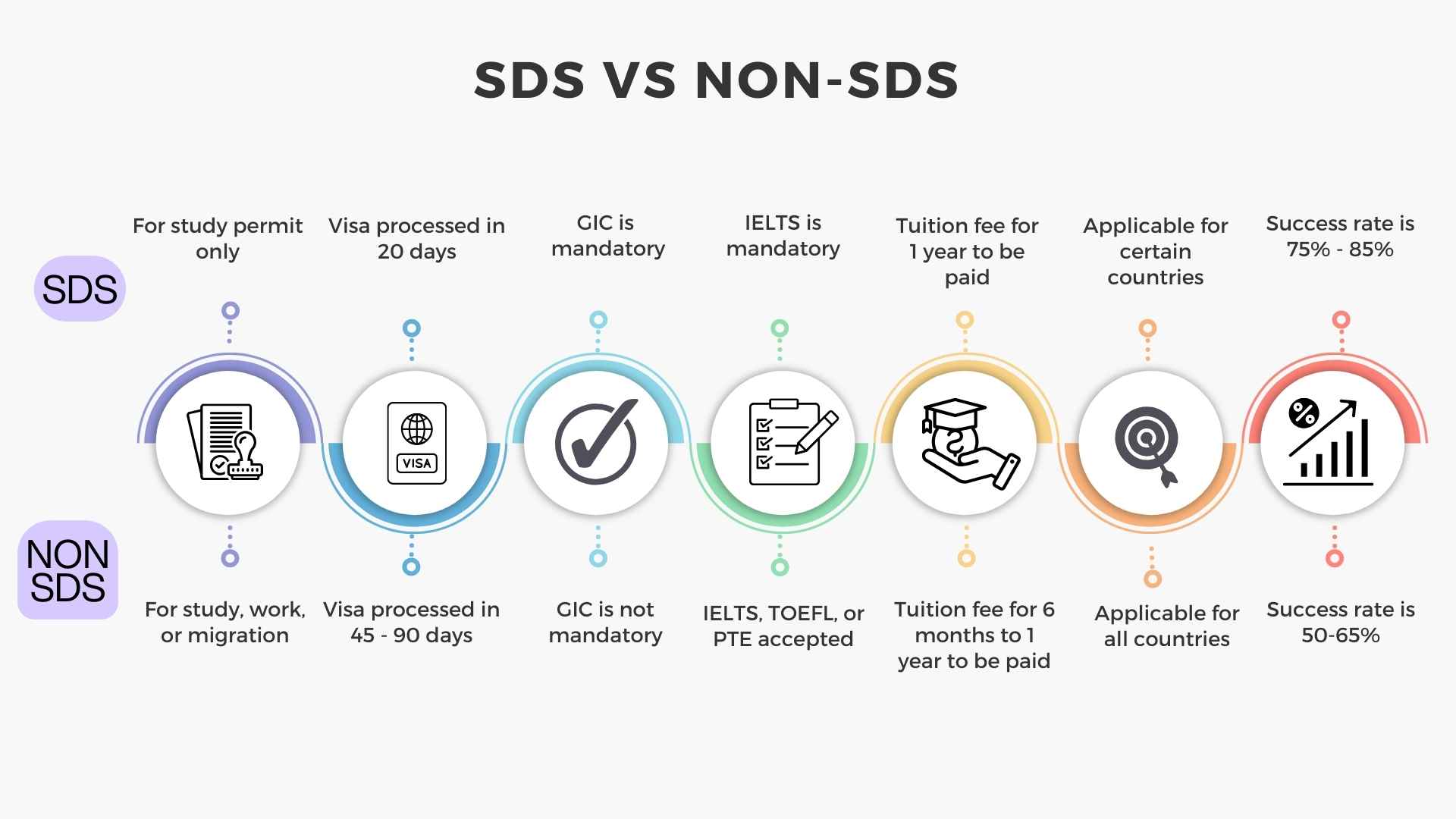
The Student Direct Stream (SDS) program was introduced by Immigration, Refugees and Citizenship Canada (IRCC) as a way to expedite the study permit process for students from select countries. By meeting certain financial and academic requirements up front, eligible students could enjoy processing times as short as 20 days, compared to the longer wait times for standard study permit applications.

SDS has been available to students from countries such as India, China, the Philippines, Vietnam, Pakistan, Brazil, and several others. Key benefits included:

  1. Faster Processing Times: SDS applications were prioritized, giving students peace of mind with shorter waiting periods.
  2. Simplified Requirements: By demonstrating adequate financial readiness and language proficiency, students could minimize the need for extensive documentation.
  3. Certainty in Planning: With a faster timeline, students could better coordinate their travel, accommodation, and enrollment without facing delays.

The Potential End of SDS: What It Means for Future Students

While SDS has been a vital program, imagine if IRCC were to end the stream. This would impact both prospective international students and Canadian institutions. Here’s what it could mean:

1. Longer Processing Times

Without SDS, students would need to rely solely on the standard study permit process, which could mean longer wait times. Processing a non-SDS application can take anywhere from several weeks to a few months, depending on the country and season. This delay could impact students’ ability to begin their programs on time, especially if they’re applying close to the start date.

2. Increased Documentation Requirements

SDS helped simplify the application process by requiring a Guaranteed Investment Certificate (GIC) and proof of payment for the first year’s tuition. If the SDS were discontinued, students might face additional financial documentation requirements. This could complicate the application process, making it more time-consuming and potentially stressful for students who would need to gather multiple bank statements or financial affidavits.

3. Uncertainty and Planning Challenges

One of the biggest advantages of SDS was the ability to plan confidently. Students could apply knowing they would likely receive a response within 20 days. The end of SDS could bring uncertainty, especially for students who need to arrange accommodation, book flights, and plan their finances. They may need to start the process even earlier to ensure they have enough time to receive their permit before their program begins.

4. Potential Impact on Canadian Universities and Colleges

Canadian institutions have become increasingly reliant on international students, and SDS was a critical tool for attracting students from high-demand regions. The end of SDS could make Canada a less attractive option for some students, as competing countries (like the UK and Australia) offer similar expedited pathways. Canadian universities and colleges might see a dip in applications from certain regions, especially if students opt for countries with faster and more predictable visa processes.

Why Might Canada End SDS? Hypothetical Scenarios

It’s worth noting that SDS has been effective for both Canada and international students, so the reasons for ending it would need to be compelling. Some possible reasons could include:

  • Policy Shift Towards Equal Processing: IRCC might decide to prioritize all applications equally instead of offering expedited services to specific countries.
  • Concerns About Fraud or Misuse: If there were significant concerns about misuse of the SDS system or fraudulent documents, Canada might consider ending the program to strengthen immigration controls.
  • Resource Allocation: The cost and resources needed to maintain SDS might be redirected toward other immigration initiatives, especially if IRCC believes the standard application process is sufficient for processing study permits.

Alternative Options for Students if SDS Were to End

While the end of SDS would indeed make things more challenging, students would still have pathways to study in Canada. Here’s what prospective students can do to improve their chances:

1. Apply as Early as Possible

With potentially longer processing times, students should apply well in advance of their program start date. Starting the application process 6–12 months in advance can help reduce stress and ensure that delays don’t impact their studies.

2. Focus on Comprehensive Documentation

Without SDS, students might need to provide more extensive documentation to prove financial stability. Be prepared to submit detailed bank statements, financial affidavits, or proof of parental or sponsor support to satisfy the requirements for a non-SDS application.

3. Consider Alternative Study Destinations

If Canada’s processing times and requirements become too challenging, some students may explore studying in other countries with similar quality education systems, like the United Kingdom, Australia, or the United States, each of which has its own fast-track visa processes.

4. Stay Updated with IRCC Announcements

The rules and requirements for Canadian immigration can change. Students should keep an eye on updates from IRCC and consult with authorized immigration advisors to understand the latest requirements and any new programs that may be introduced to replace SDS.

5. Leverage Canadian Embassy Support

In some cases, Canadian embassies or consulates offer information sessions or resources to help international students with their applications. Attending these events can provide valuable insights and ensure that you understand what is needed for a successful application.

Conclusion

While the end of Canada’s Student Direct Stream (SDS) is a hypothetical scenario, it raises important considerations for both international students and Canadian institutions. SDS has been a valuable tool in helping students from select countries access Canadian education quickly and efficiently. Losing this program would mean adjusting to new processes, potentially with longer wait times and increased documentation requirements.

International students dreaming of studying in Canada should stay proactive, apply early, and be prepared with all necessary documents to ensure a smooth application experience. If Canada does choose to discontinue SDS, it’s likely that IRCC will explore other options to keep Canada competitive in the global education landscape.

Canada remains a top destination for international students, offering world-class education, a high quality of life, and opportunities for work and residency. Even without SDS, Canada will continue to welcome students from around the world—though it may require a bit more patience and preparation along the way.
Read More