
Loading...
Hi, How Can We Help You?

Tag Archives: Immigration

November 9, 2026

Canada remains one of the world’s most sought-after destinations for immigrants seeking professional opportunities, family reunification, permanent residence and a better quality of life. However, the country’s immigration system is evolving as the government works to balance economic growth, labor-market requirements, housing availability and population management.

On November 5, 2026, Immigration, Refugees and Citizenship Canada (IRCC) published supplementary details of Canada’s 2027–2029 Immigration Levels Plan, outlining the country’s immigration targets for the next three years.

The announcement provides important information for skilled workers, international graduates, temporary foreign workers, provincial nominee applicants, family sponsorship candidates and people considering permanent residence in Canada.

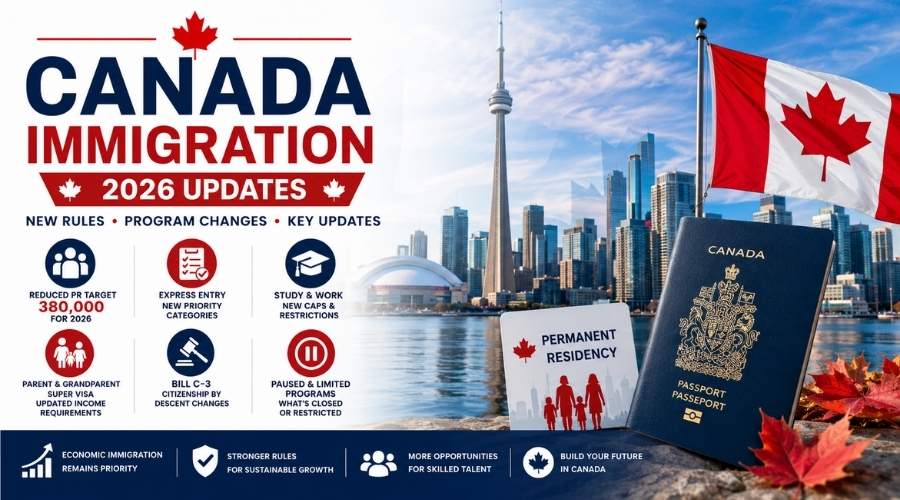
Under the new plan, Canada intends to maintain an annual permanent resident admission target of 380,000 while stabilizing new temporary resident arrivals at 370,000 per year.

The government is also maintaining its focus on economic immigration, increasing targets for French-speaking permanent residents outside Quebec and introducing additional measures to transition certain people already living in Canada to permanent residence.

In this comprehensive guide, we break down Canada’s 2027–2029 Immigration Levels Plan, explain the major immigration categories and discuss what the new targets could mean for prospective applicants.

1. What Is Canada’s Immigration Levels Plan 2027–2029?

Canada’s Immigration Levels Plan is a government policy framework that establishes how many new permanent residents the country intends to admit over a specified period.

It also provides targets for new temporary resident arrivals, particularly international students and temporary workers.

The plan helps the Canadian government manage immigration while considering several national priorities, including:

  • Supporting economic development and addressing labor shortages.
  • Attracting skilled workers and international talent.
  • Maintaining family reunification opportunities.
  • Supporting refugees and people requiring humanitarian protection.
  • Strengthening rural, regional and Francophone communities.
  • Managing population growth and pressure on public services, infrastructure and housing.

The 2027–2029 plan continues Canada’s approach towards a more sustainable and predictable immigration system.

Rather than significantly increasing the number of new arrivals, the government intends to maintain stable immigration targets and prioritise applicants who can contribute to Canada’s economic and social development.

Key highlights of the 2027–2029 Immigration Levels Plan

Here are the most important announcements:

Immigration category Annual target
New temporary resident arrivals 370,000
Temporary workers 220,000
International students 150,000
Permanent resident admissions 380,000
Economic immigration 244,700
Family sponsorship 81,000
Refugees and protected persons 49,300
Humanitarian and other admissions 5,000

The economic immigration category will represent approximately 64.4% of planned permanent resident admissions throughout the three-year period.

These figures demonstrate that economic immigration will remain Canada’s largest immigration priority.

2. Canada’s Temporary Resident Targets for 2027–2029

One of the most significant aspects of the new plan is the decision to stabilize new temporary resident arrivals at 370,000 annually.

Temporary residents include foreign nationals entering Canada for purposes such as employment and education under the relevant temporary immigration programmes.

The government’s targets focus on two principal groups: temporary workers and international students.

Temporary resident targets by category
Category 2027 2028 2029
International Mobility Program 170,000 170,000 170,000
Temporary Foreign Worker Program 50,000 50,000 50,000
Total temporary workers 220,000 220,000 220,000
International students 150,000 150,000 150,000
Total new arrivals 370,000 370,000 370,000

The overall temporary resident arrival target also has a planning range of 355,000 to 385,000 for each year.

It is important to understand that these figures refer to new arrivals under the relevant temporary worker and international student program. They are not the total number of temporary residents living in Canada.

Permit extensions, visitors, in-Canada study and work permit applications and asylum claimants are not assigned individual arrival targets under this table.

International Mobility Program (IMP)

The International Mobility Program has an annual target of 170,000 temporary worker arrivals.

The program covers work permits that do not require a Labor Market Impact Assessment (LMIA).

It includes several categories of work permits issued under international agreements, Canadian economic and social interests, and other eligible immigration provisions.

Examples include certain work permits issued through international agreements and applicable economic immigration arrangements.

An important clarification concerns Post-Graduation Work Permits (PGWPs). Although PGWPs are associated with the International Mobility Program, IRCC does not include them in these new-arrival targets because it treats them as an extension or change of status rather than a new arrival in Canada.

Temporary Foreign Worker Program (TFWP)

Canada has allocated 50,000 annual new worker arrivals to the Temporary Foreign Worker Program.

This program allows Canadian employers to hire foreign nationals when suitable Canadian citizens or permanent residents are not available to fill specific positions.

Employers generally need a positive or neutral Labor Market Impact Assessment (LMIA), where required, before hiring a foreign worker under the program.

The LMIA process evaluates the potential impact of employing a foreign national on Canada’s labor market.

The 2027–2029 targets include eligible non-seasonal workers who remain in Canada for longer than one year. Certain seasonal workers entering and leaving Canada within the same calendar year are excluded from these targets.

For foreign workers, the allocation indicates that employer-supported temporary employment will continue to form part of Canada’s immigration system.

However, the target does not guarantee that an employer can obtain approval to hire a foreign worker. Employers and applicants must satisfy the applicable programme requirements.

International Student Arrivals

Canada plans to welcome 150,000 new international student arrivals annually between 2027 and 2029.

These targets relate to foreign nationals studying for six months or longer at eligible designated learning institutions (DLIs).

The figures should not be confused with the number of study permit applications accepted or approved. Study permit application caps operate separately from the immigration arrival targets.

For students, the announcement indicates that Canada intends to maintain a controlled and consistent level of new international student arrivals over the next three years.

3. Canada’s Permanent Residence Targets for 2027–2029

Permanent residence remains a major component of Canada’s immigration strategy.

According to the new plan, Canada will maintain an annual permanent resident admission target of 380,000 throughout 2027, 2028 and 2029.

The overall planned admissions also have a range of 352,500 to 422,000 per year, providing operational flexibility to respond to changing immigration priorities and application pressures.

Permanent resident admission targets
Immigration category 2027 2028 2029
Economic 244,700 244,700 244,700
Family 81,000 81,000 81,000
Refugees and Protected Persons 49,300 49,300 49,300
Humanitarian and Other 5,000 5,000 5,000
Total permanent resident admissions 380,000 380,000 380,000

The distribution demonstrates that economic immigration will account for nearly two-thirds of planned admissions.

Family reunification, refugee protection and humanitarian commitments will continue to represent important parts of the country’s immigration policy.

It is also important to remember that permanent resident admissions refer to people admitted as permanent residents, not the number of applications received by IRCC.

4. Economic Immigration: Canada’s Largest Immigration Priority

Economic immigration is the most significant category in Canada’s 2027–2029 Immigration Levels Plan.

The government has allocated 244,700 permanent resident admissions annually to this category, representing approximately 64.4% of all planned permanent resident admissions.

The objective is to attract skilled professionals, entrepreneurs and workers who can support Canada’s economy and address labor-market shortages.

The economic category includes several immigration program and regional pathways.

Economic immigration targets by programme
Program or category 2027 2028 2029
Federal High Skilled 100,000 100,000 100,000
Federal Business 1,500 2,725 1,000
Federal Economic Pilots 7,900 6,175 7,400
Rural Community Immigration Program 5,500 6,000 6,500
Atlantic Immigration Program 6,000 6,000 6,000
Provincial Nominee Program 95,000 95,000 95,000
Quebec Skilled Workers and Business TBD TBD TBD
Total Economic 244,700 244,700 244,700

The Federal High Skilled, Federal Business and pilot program categories have different planning ranges for individual years. The Quebec figures are to be determined under Quebec’s own immigration planning framework.

A. Federal High Skilled Immigration

The Federal High Skilled category has a target of 100,000 permanent resident admissions annually.

It includes three important federal immigration program:

Federal Skilled Worker Program (FSWP)

This program is designed for skilled workers with qualifying foreign work experience who meet the relevant education, language, selection and other eligibility requirements.

It offers an immigration pathway for eligible professionals who have developed their careers outside Canada.

Canadian Experience Class (CEC)

The Canadian Experience Class is designed for eligible skilled workers with qualifying Canadian work experience.

It is particularly relevant to temporary workers and international graduates who obtain qualifying Canadian work experience and meet the program requirements.

Federal Skilled Trades Program (FSTP)

This program provides a permanent residence pathway for eligible skilled tradespeople with qualifying work experience and other required qualifications.

It supports Canada’s demand for workers in specific skilled trades.

What does the 100,000 target mean for Express Entry applicants?

Express Entry is Canada’s application management system for several federal economic immigration program, including the three programmes mentioned above.

The 100,000 Federal High Skilled target indicates the planned scale of admissions through this category.

IRCC will continue using labor-market information, economic priorities and consultation with provinces, territories and other stakeholders to determine which candidates may receive invitations through applicable Express Entry selection categories.

However, the 100,000 target does not guarantee that every eligible Express Entry candidate will receive an Invitation to Apply (ITA).

Candidates must continue to satisfy the requirements of their selected program and any applicable invitation criteria.

B. Federal Business Immigration

Canada has allocated the following admissions targets to its Federal Business category:

  • 2027: 1,500 admissions.
  • 2028: 2,725 admissions.
  • 2029: 1,000 admissions.

This category includes admissions associated with the Start-up Visa Program and the Self-employed Persons Program.

The figures vary significantly across the three years, demonstrating that the government does not intend to maintain a uniform target for this category.

However, admission targets do not necessarily represent new application spaces or confirmation that a program is accepting applications.

Applicants considering business immigration should verify the current program status, eligibility requirements and application arrangements before making investment or business plans.

C. Federal Economic Immigration Pilots

Federal Economic Pilots have an important role in addressing specific labor shortages and supporting economic development.

The government has allocated 7,900 admissions in 2027, 6,175 in 2028 and 7,400 in 2029.

The category includes several program and initiatives, such as:

  • Home Care Worker Immigration pilots.
  • Agri-Food Pilot.
  • Economic Mobility Pathways Pilot.
  • Francophone Community Immigration Pilot.
  • Francophone Minority Communities Student Pilot.

These initiatives are designed to address particular economic, occupational, regional and community needs.

For example, home care program support the recruitment of eligible workers in child care and home support.

The Economic Mobility Pathways Pilot connects eligible skilled refugees and displaced people with Canadian employers and economic immigration opportunities.

The Francophone program support French-speaking newcomers and the development of Francophone communities outside Quebec.

An important detail is that the Federal Economic Pilots allocation includes admissions from previous program and applications that continue to be processed. Therefore, the target should not be interpreted as a completely new application quota for every listed pilot.

Applicants should check whether a particular program is currently open and accepting applications.

5. Provincial Nominee Program (PNP)

The Provincial Nominee Program remains one of the largest economic immigration categories in Canada’s new immigration plan.

IRCC has set an annual target of 95,000 permanent resident admissions through the PNP for 2027, 2028 and 2029.

The program allows participating provinces and territories to nominate eligible foreign nationals who meet their regional economic and program-market requirements.

Different provinces have different immigration priorities. Some focus on skilled professionals, while others may priorities healthcare workers, tradespeople, technology professionals, international graduates or workers in occupations experiencing shortages.

Why is the PNP important?

Canada has significant economic and labour-market differences between provinces and territories.

The PNP allows regional governments to identify applicants whose qualifications and experience match local requirements.

For eligible applicants, provincial nomination can provide an important route towards permanent residence.

However, each province operates its own immigration streams, eligibility criteria and nomination arrangements.

A person who qualifies under one provincial program may not qualify under another.

What should PNP applicants expect in 2027–2029?

The stable annual target of 95,000 indicates that provincial nomination will remain an important component of economic immigration.

Prospective applicants should monitor provincial immigration announcements, nomination allocations, occupation priorities and changes in selection criteria.

It is also important to distinguish between provincial nominations and federal permanent residence admissions. Receiving a provincial nomination does not automatically mean permanent residence has been granted. Applicants must still complete the applicable federal immigration process.

6. Rural Community Immigration Program and Atlantic Immigration Program

Canada is also continuing to support immigration outside its largest metropolitan areas.

The 2027–2029 plan includes separate targets for rural and Atlantic immigration initiatives.

Rural Community Immigration Program (RCIP)

The Rural Community Immigration Program has the following annual admission targets:

Year Target
2027 5,500
2028 6,000
2029 6,500

The gradual increase reflects Canada’s interest in supporting rural communities and addressing regional labour shortages.

The program is designed to connect eligible foreign workers with participating rural communities and employers.

Applicants must meet the applicable program requirements, including the relevant employment and community conditions.

A noteworthy detail is that the admissions target also includes remaining applications from the former Rural and Northern Immigration Pilot (RNIP), which will continue to be processed.

Therefore, the entire allocation should not be interpreted as new places available to future applicants.

Atlantic Immigration Program (AIP)

The Atlantic Immigration Program has an annual target of 6,000 permanent resident admissions throughout the three-year period.

It supports eligible skilled foreign workers and international graduates who wish to establish themselves in one of Canada’s four Atlantic provinces:

  • New Brunswick.
  • Newfoundland and Labrador.
  • Nova Scotia.
  • Prince Edward Island.

The program connects prospective immigrants with designated employers and regional employment opportunities.

Eligible applicants must satisfy the relevant work experience, education, language, settlement and other program requirements, although some international graduates may qualify for specific exemptions.

For foreign nationals interested in living outside Canada’s largest cities, the Atlantic Immigration Program may be worth exploring.

7. Family Sponsorship

Family reunification remains an important part of Canada’s immigration policy.

The new plan allocates 81,000 permanent resident admissions annually to the Family category.

This represents approximately 21.3% of planned permanent resident admissions.

Family sponsorship targets
Family immigration category Annual target
Spouses, Partners and Children 66,000
Parents and Grandparents 15,000
Total Family 81,000
Spousal and Partner Sponsorship

Canadian citizens and permanent residents may be eligible to sponsor their spouses or partners for permanent residence, subject to the applicable requirements.

These program help families remain together and establish their lives in Canada.

Eligible relationships may include spouses, common-law partners and conjugal partners, depending on the specific circumstances and immigration requirements.

Parents and Grandparents Sponsorship

Canada also continues to provide permanent residence opportunities for eligible parents and grandparents of Canadian citizens and permanent residents.

The annual target for this category is 15,000 admissions.

However, applicants should understand that the Parents and Grandparents Program has its own intake arrangements, eligibility requirements and selection procedures.

The annual admission target does not mean that applications are continuously open or that every interested sponsor can immediately submit an application.

Prospective sponsors should follow official IRCC announcements for the latest intake instructions.

8. Refugees and Protected Persons

Canada maintains its commitment to protecting refugees and people who need humanitarian protection.

The 2027–2029 plan allocates 49,300 permanent resident admissions annually to the Refugees and Protected Persons category.

This represents approximately 13% of planned permanent resident admissions.

Refugee and protected person targets
Category Annual target
Protected Persons in Canada and Dependents Abroad 20,000
Government-Assisted Refugees 11,750
Privately Sponsored Refugees 17,550
Total 49,300
Protected Persons in Canada

People who receive protected person status in Canada may be eligible to apply for permanent residence under the applicable immigration rules.

The category also includes eligible dependents abroad.

Government-Assisted Refugees

Government-Assisted Refugees are selected for resettlement through Canada’s refugee protection and resettlement arrangements.

They receive settlement support through government-assisted program.

Privately Sponsored Refugees

Privately Sponsored Refugees are supported by eligible private sponsors, including groups and organizations that undertake settlement responsibilities.

Canada’s continued allocation to these categories demonstrates that refugee protection remains an important responsibility within the immigration system.

These pathways are different from ordinary economic immigration program and have their own eligibility and referral requirements.

9. Humanitarian and Compassionate Immigration

The government has allocated 5,000 permanent resident admissions each year to the Humanitarian and Compassionate and Other category.

This represents approximately 1.3% of planned permanent resident admissions.

The category includes people selected on humanitarian and compassionate grounds, certain public policy cases and the permit holder class.

Humanitarian and compassionate applications are assessed according to specific legal and administrative requirements.

These provisions may be relevant in exceptional circumstances where an applicant has compelling factors that warrant consideration under the applicable immigration framework.

However, they should not be viewed as a general alternative to meeting the normal requirements of economic or family immigration program.

10. Canada Is Increasing French-Speaking Immigration Outside Quebec

One of the most notable long-term developments in the 2027–2029 plan is the increasing focus on French-speaking permanent residents outside Quebec.

Canada aims to strengthen Francophone Minority Communities by attracting more French-speaking newcomers to communities across the country.

The government has announced the following targets:

Year French-speaking PR admissions target outside Quebec
2027 9.5% — approximately 31,825 admissions
2028 10.5% — approximately 35,175 admissions
2029 12% — approximately 40,200 admissions

These figures indicate a gradual increase in Canada’s planned French-speaking permanent resident admissions outside Quebec.

Why is French language proficiency important?

Canada has two official languages: English and French.

French-speaking immigrants can contribute to the development of Francophone communities, support public services and help address specific labour-market requirements.

French language proficiency may also be relevant to certain Express Entry selection categories and immigration pathways.

For prospective immigrants, developing French language skills could therefore provide an additional advantage when exploring suitable immigration opportunities.

However, French proficiency does not automatically guarantee permanent residence or an invitation to apply.

Applicants must still meet the specific language, education, experience and other eligibility requirements of the immigration program they choose.

It is also important to note that Quebec has a separate immigration selection framework under the Canada–Quebec Accord. The figures above relate specifically to French-speaking admissions outside Quebec.

11. New Time-Limited PR Measure for Certain People Already in Canada

Another important announcement in the new immigration plan is a time-limited measure designed to provide additional capacity for processing permanent residence applications in 2027.

The measure focuses on two groups of people who are already living in Canada.

First Group: Workers and Their Accompanying Family Members

The government plans to transition certain in-Canada workers and their accompanying family members to permanent residence.

This initiative will be implemented in collaboration with provinces and territories.

Its purpose is to support regional labour-market needs and help retain workers who are already contributing to Canada’s economy.

The measure may be particularly relevant to discussions about workers who have established employment and community connections in Canada.

However, IRCC has not provided a general eligibility checklist or a specific number of available places for this new measure on the supplementary plan page.

Applicants should not assume that holding a Canadian work permit automatically makes them eligible.

Second Group: People Waiting in Canada for Many Years

The second group focuses on certain individuals already living in Canada who have been waiting for many years for permanent residence.

This humanitarian initiative is intended to provide a more efficient transition to permanent resident status, maintain family unity and help Canada fulfil existing humanitarian commitments.

The initiative is time-limited and is not a general new permanent residence pathway for everyone living in Canada.

The detailed eligibility arrangements will need to be confirmed through further official guidance.

12. Existing One-Time Measures

Alongside the new time-limited measure, IRCC will continue implementing two existing initiatives announced in Budget 2025.

These measures are intended to accelerate the transition of certain people already living in Canada to permanent residence during 2026 and 2027.

The two groups include:

Up to 115,000 Protected Persons in Canada and Their In-Canada Dependents and Dependents Abroad

This initiative is intended to accelerate permanent residence transitions for eligible protected persons and their dependents.

Up to 33,000 Work Permit Holders

This measure is designed to transition eligible work permit holders already in Canada to permanent residence.

These initiatives should be understood as targeted, one-time measures rather than permanent additions to the standard immigration program.

The published figures represent the maximum intended scale of these initiatives, not a guarantee that every protected person or work permit holder will automatically receive permanent residence.

Applicants must follow the specific instructions and eligibility arrangements established by IRCC.

13. What Does the New Immigration Plan Mean for Express Entry Applicants?

Express Entry is one of the most important immigration systems for skilled foreign workers interested in permanent residence in Canada.

The 2027–2029 plan allocates 100,000 annual admissions to the Federal High Skilled category, which includes the Federal Skilled Worker Program, Canadian Experience Class and Federal Skilled Trades Program.

This demonstrates the continued importance of skilled economic immigration.

However, prospective Express Entry applicants should understand that an overall admission target does not determine individual selection outcomes.

The following factors remain important:

  • Age and educational qualifications.
  • Skilled work experience.
  • English or French language proficiency.
  • Comprehensive Ranking System (CRS) score, where applicable.
  • Eligibility for category-based selection.
  • Provincial nomination opportunities.
  • The immigration criteria and invitation arrangements in effect at the time of selection.

IRCC may continue to adjust Express Entry category priorities according to Canada’s economic and labor-market requirements.

Consequently, candidates should focus on improving their qualifications and maintaining accurate, updated Express Entry profiles where eligible.

14. What Should Foreign Workers and Immigrants Do Now?

The 2027–2029 Immigration Levels Plan provides important information about Canada’s immigration priorities, but it does not establish automatic eligibility for any individual applicant.

People interested in moving to Canada should prepare according to their qualifications, professional experience, financial circumstances and immigration objectives.

Here are some practical recommendations.

For Skilled Workers

Research the Federal Skilled Worker Program, Canadian Experience Class and Federal Skilled Trades Program.

Evaluate your education, occupational experience and language proficiency before choosing a pathway.

For Temporary Workers in Canada

Monitor federal and provincial immigration announcements.

Workers with established Canadian employment should understand the available economic immigration and provincial nomination options.

Do not assume that a temporary work permit automatically leads to permanent residence.

For International Graduates

Review Canadian Experience Class eligibility, relevant provincial program and current PGWP requirements.

Canadian education can support long-term career development, but graduating from a Canadian institution does not guarantee permanent residence.

For Provincial Nominee Applicants

Research the immigration priorities of the province where you intend to settle.

Compare nomination streams based on occupation, employment, education and other program requirements.

For French-Speaking Applicants

Consider developing French language proficiency.

French may be relevant to specific Express Entry selection categories and immigration pathways designed to support Francophone communities outside Quebec.

For Family Sponsorship Applicants

Review the current sponsorship requirements, income rules where applicable, relationship documentation and application intake arrangements.

Do not make plans based solely on the annual family immigration target.

15. Important Things to Understand

Although the government has announced stable immigration targets, applicants should understand that targets are planning figures rather than individual guarantees.

There are several important details in the IRCC announcement.

First, permanent residence targets are not application quotas.

The figure of 380,000 represents planned permanent resident admissions, not the number of applications that IRCC will receive or approve.

Second, planning ranges allow flexibility.

The overall permanent resident target of 380,000 has an annual range of 352,500 to 422,000.

These ranges allow IRCC to respond to operational requirements and changes in immigration priorities.

Third, some future targets remain subject to review.

The 2028 and 2029 targets are identified as notional and may be confirmed or adjusted annually.

Temporary resident and permanent resident targets therefore should not all be treated as permanently fixed figures.

Fourth, programme targets do not guarantee new application spaces.

Some programme allocations include applications from previous immigration initiatives that are still being processed.

Applicants should always verify the current status of a programme before submitting an application.

Conclusion

Canada’s 2027–2029 Immigration Levels Plan highlights a more controlled and economically focused approach to immigration.

By maintaining an annual permanent residence target of 380,000 and stabilizing new temporary resident arrivals at 370,000, the government aims to provide greater predictability while managing population growth and supporting national economic priorities.

Economic immigration remains the largest category, with 244,700 annual admissions planned. The Provincial Nominee Program will continue to play an important role, while family sponsorship, refugee protection and humanitarian immigration remain central to Canada’s immigration framework.

The increasing focus on French-speaking permanent residents outside Quebec and the new transition measures for certain people already in Canada are also important developments.

For skilled workers, temporary residents, international graduates and families considering Canada, understanding these changes is an essential first step towards choosing an appropriate immigration pathway.

However, immigration targets should never be confused with individual eligibility or guaranteed permanent residence.

Before making an immigration decision, applicants should carefully review the latest programme requirements, assess their qualifications and seek reliable professional guidance where necessary.
Read More

June 11, 2026

FIFA World Cup 2026 Overview

The FIFA World Cup 2026 is set to make history as the largest and most ambitious FIFA World Cup ever organized. For the first time in the tournament’s history, three nations—the United States, Canada, and Mexico—will jointly host the event, creating a truly continental football festival. The expanded format will welcome 48 national teams from around the world, significantly increasing the number of matches, participating countries, and traveling supporters compared to previous tournaments.

Football fans can expect an extraordinary experience that extends beyond the stadiums. The tournament will showcase some of North America’s most iconic cities, world-renowned attractions, diverse cultures, and modern sporting infrastructure. With millions of visitors expected to travel between host cities, FIFA World Cup 2026 is anticipated to become one of the largest international travel events of the decade.

The tournament will feature:

  • 48 national teams
  • 104 matches
  • 16 host cities
  • Three host countries
  • Millions of international visitors

The expanded tournament structure means more opportunities for fans to attend matches, explore multiple destinations, and experience the unique atmosphere of football’s biggest global event. Whether you plan to attend a single match or follow your team throughout the competition, understanding the logistics of travel and entry requirements will be an essential part of your World Cup journey.

Host Countries

The FIFA World Cup 2026 will be hosted by three neighboring North American countries, each offering distinct attractions and travel experiences. The United States will host the majority of matches, including games in some of the world’s most famous metropolitan areas. Canada will welcome fans to its modern stadiums and vibrant multicultural cities, while Mexico will provide a passionate football atmosphere rooted in decades of World Cup history.

The multi-country format gives fans the unique opportunity to combine sports tourism with international travel. Visitors can experience everything from the skyscrapers of New York and Toronto to the historic landmarks and cultural attractions of Mexico City.

  • United States
  • Canada
  • Mexico

Expected Tournament Period

The FIFA World Cup 2026 is scheduled to take place during June and July 2026, a period that coincides with peak summer travel across North America. During this time, hotels, flights, transportation services, and tourist attractions are expected to experience exceptionally high demand due to the influx of football supporters.

Because the tournament spans several weeks, many visitors will choose to extend their trips beyond match attendance. This makes early planning particularly important, especially for travelers who intend to visit multiple cities or countries during their World Cup experience.

Why Early Travel Planning Is Important

Planning ahead will be one of the most important factors in ensuring a successful FIFA World Cup 2026 experience. Major international sporting events often create significant demand for travel services, and the scale of the 2026 tournament means that airlines, hotels, and visa processing centers may experience unprecedented pressure.

Travelers who wait until the final months before the tournament may encounter limited flight availability, increased accommodation costs, and extended visa processing times. Early preparation not only provides more travel options but can also lead to significant savings and a smoother overall experience.

Demand for visas, flights, hotels, and match tickets is expected to be extremely high.

Fans should begin planning as early as possible to avoid:

  • Visa appointment delays
  • Increased airfare prices
  • Travel restrictions
  • Last-minute ticket challenges

For many travelers, obtaining the appropriate visa may take several weeks or even months depending on nationality and destination. By starting preparations early, fans can focus on enjoying the excitement of the tournament rather than dealing with avoidable travel complications.

Understanding the Multi-Country World Cup Experience

One of the most exciting features of FIFA World Cup 2026 is its multi-country format. Unlike previous tournaments hosted by a single nation, fans may find themselves traveling across international borders several times during the competition. This unique structure creates incredible opportunities for tourism but also introduces additional travel planning considerations.

Many supporters will want to follow their national teams throughout the tournament, which may require attending matches in different countries. As teams progress through the competition, fans may need to adjust travel plans quickly and ensure they possess the necessary documentation for each destination.

A fan may:

  • Arrive in the USA
  • Watch group-stage matches in Canada
  • Travel to Mexico for knockout rounds
  • Return to the USA for the final stages

Because of this, travelers may require separate entry permissions for each country. Understanding immigration requirements in advance can help prevent unexpected complications at airports or border crossings during the tournament.

Visa Requirements for FIFA World Cup 2026

Obtaining the correct visa or travel authorization is one of the most important steps for international visitors planning to attend FIFA World Cup 2026. Since the tournament spans three countries, travelers should carefully review the immigration policies of each destination they intend to visit.

Visa requirements vary significantly depending on nationality, passport type, travel history, and intended duration of stay. Some travelers may qualify for visa-free entry or electronic travel authorizations, while others may need to complete formal visa applications several months in advance.

Visa requirements depend on:

  • Your nationality
  • Your passport
  • Countries you plan to visit
  • Duration of stay
  • Purpose of travel

Always verify the latest immigration requirements before submitting any application. Immigration policies can change, and travelers should ensure they are relying on current information when making travel arrangements.

FIFA World Cup 2026 Tickets

Securing official match tickets will be one of the most important milestones in preparing for the tournament. Due to the immense popularity of the FIFA World Cup, demand for tickets is expected to exceed supply for many matches, particularly knockout-stage games and fixtures involving major football nations.

FIFA typically releases tickets in multiple sales phases, giving fans several opportunities to purchase access to matches. Understanding the different ticket categories and purchasing procedures can help supporters maximize their chances of attending the games they want to see.

Official FIFA tickets are expected to be released through FIFA’s ticketing platform.

Fans should purchase tickets only through authorized channels.

Ticket Categories,FIFA offers:

  • Individual Match Tickets

These tickets provide access to a specific match and are often the most popular option for fans who want flexibility in their travel plans.

  • Team-Specific Series

This option allows supporters to follow a particular national team throughout designated stages of the tournament, creating a more immersive fan experience.

  • Venue Series

Fans can attend multiple matches at a single stadium or host city, making this package ideal for travelers who prefer to remain in one location.

  • Hospitality Packages

Premium experiences may include:

  • VIP seating
  • Lounge access
  • Catering services
  • Exclusive amenities

These packages are particularly attractive to corporate guests and travelers seeking enhanced comfort and exclusive matchday experiences.

Protect Yourself from Ticket Scams

Major international sporting events often attract fraudulent activity, and FIFA World Cup 2026 is expected to be no exception. Unsuspecting fans may encounter fake ticket websites, unauthorized resellers, and misleading advertisements promising guaranteed access to sold-out matches.

Scams can result in financial losses and disappointment upon arrival at stadiums. Therefore, purchasing tickets through legitimate channels should be a top priority for every traveler.

To protect yourself:

  • Purchase only from official FIFA channels
  • Avoid unauthorized resellersVerify payment security
  • Be cautious of unrealistic discounts
  • Keep confirmation records

Taking these precautions can help ensure that your World Cup experience begins on a positive note and that your ticket investment remains secure throughout the tournament.


Final Thoughts

The FIFA World Cup 2026 promises to be one of the most exciting sporting events ever hosted. With matches spread across the United States, Canada, and Mexico, fans will have the opportunity to experience world-class football alongside unforgettable travel experiences.

Early planning, proper visa preparation, and careful travel arrangements will help ensure a smooth journey from the first match to the final whistle.

Whether you are supporting your national team or simply celebrating the world’s most popular sport, now is the perfect time to begin preparing for FIFA World Cup 2026.

Read More

May 16, 2026

Canada has introduced major immigration reforms in 2026 to better manage population growth and reduce pressure on housing, healthcare, education, and infrastructure. While the country remains committed to welcoming skilled workers, students, entrepreneurs, and families, the immigration system is now more selective and strategically focused.

The most significant changes include a reduction in permanent resident admissions to 380,000, stricter limits on international students and temporary foreign workers, updated income requirements for the Parent and Grandparent Super Visa, and important citizenship reforms under Bill C-3.

If you are planning to move to Canada, understanding these changes is essential for choosing the right immigration pathway and preparing a competitive application.

Why Canada Changed Its Immigration Policies in 2026

In recent years, Canada experienced rapid population growth driven by high levels of permanent and temporary immigration. Although immigration remains critical to economic development, this growth increased demand for:

  • Housing and rental accommodation
  • Healthcare services
  • Schools and colleges
  • Transportation infrastructure
  • Public services

To ensure sustainable growth, the government adopted a more balanced immigration approach that aligns admissions with the country’s capacity to support newcomers successfully.

Key Canada Immigration Changes in 2026

Update What It Means
Permanent Resident Target Reduced Canada plans to admit approximately 380,000 new permanent residents in 2026
Temporary Resident Reduction Goal to reduce temporary residents to below 5% of Canada’s population
International Student Caps Provincial limits continue to restrict new study permits
Temporary Foreign Worker Restrictions Tighter employer compliance and reduced access in some sectors
Super Visa Income Changes Sponsors must meet updated financial thresholds
Bill C-3 Citizenship Reform Expanded citizenship by descent and restoration of citizenship in certain cases
Stronger Economic Focus Priority given to skilled workers and labour market needs

Permanent Resident Target Reduced to 380,000

One of the most important immigration updates for 2026 is the reduction of Canada’s permanent resident admissions target to approximately 380,000.

This lower target reflects the government’s intention to balance immigration with housing availability, infrastructure, and public services. Although admissions are reduced, Canada continues to prioritize economic immigration and family reunification.

Express Entry 2026: Priority Categories and New Trends

Express Entry remains Canada’s primary system for selecting skilled workers for permanent residence.

In 2026, invitations are increasingly targeted toward applicants with skills in high-demand sectors.

Priority Occupation Categories
Category Examples
Healthcare and Social Services Nurses, physicians, caregivers, therapists
Skilled Trades Electricians, plumbers, welders, carpenters
Education Teachers and early childhood educators
Transportation Truck drivers and transport specialists
French-Language Proficiency Candidates with strong French skills
Research and Advanced Talent Researchers and senior professionals
Foreign Medical Doctors Doctors with Canadian work experience

Applicants in these categories may receive invitations even with lower CRS scores than in general draws.

Provincial Nominee Program (PNP): One of the Best Pathways

The Provincial Nominee Program remains one of the strongest options for immigration to Canada.

Each province selects candidates whose skills match local labour shortages. A nomination through an Express Entry-linked stream adds 600 CRS points, effectively guaranteeing an invitation to apply for permanent residence.

Popular Provinces for Immigration
  • Ontario
  • British Columbia
  • Alberta
  • Saskatchewan
  • Manitoba
  • Nova Scotia

Temporary Residents to Be Reduced Below 5% of Population

Canada aims to reduce the total number of temporary residents—including international students and temporary foreign workers—to below 5% of the national population.

This policy has major implications for:

  • Study permits
  • Work permits
  • Open work permits for family members
  • Employer-sponsored LMIA applications

Applicants should expect more selective approvals and greater scrutiny of documentation.

International Student Policy Changes in 2026

International students continue to have opportunities in Canada, but admission has become more competitive.

Change Impact
Provincial Study Permit Caps Limits the number of new approvals
Stricter Financial Requirements Greater proof of funds may be required
Increased Institutional Oversight Focus on approved institutions with strong outcomes
Family Work Permit Restrictions Reduced eligibility for some spouses

Students should choose programs aligned with labour market needs to maximize future immigration opportunities.

Temporary Foreign Worker Program Restrictions

Canada has introduced stricter rules for employers using the Temporary Foreign Worker Program.

Key Changes
  • More employer inspections
  • Reduced use of low-wage foreign labour in some sectors
  • Stronger LMIA requirements
  • Greater focus on occupations facing genuine shortages

Workers in healthcare, construction, agriculture, and skilled trades continue to enjoy strong demand.

Parent and Grandparent Super Visa Income Updates

The Super Visa remains an important option for bringing parents and grandparents to Canada for extended visits.

In 2026, sponsors must meet updated income thresholds based on family size. Proper financial planning is essential before submitting an application.

Bill C-3: Citizenship by Descent Changes

Bill C-3 introduces significant reforms to Canada’s citizenship laws.

Main Benefits
  • Expands citizenship by descent beyond the first generation in certain cases
  • Restores citizenship to some previously excluded individuals
  • Allows transmission of citizenship if the Canadian parent accumulated sufficient physical presence in Canada

This legislation benefits many Canadian families living abroad.

Programs That Are Paused, Limited, or More Competitive

Program Current Status in 2026
Parent and Grandparent Program (PGP) Invitation-based and highly competitive
Some LMIA Work Permit Streams More restrictive and closely monitored
International Student Admissions Limited by provincial caps
Temporary Public Policies Several previous policies have expired

Best Immigration Pathways in 2026

Applicant Type Recommended Pathways
Skilled Professionals Express Entry, Provincial Nominee Program
Temporary Workers in Canada Canadian Experience Class, PNP
International Students Study Permit → PGWP → Permanent Residence
Entrepreneurs Start-Up Visa Program
Families Spousal Sponsorship, Super Visa

How to Improve Your Chances of Success

To remain competitive under Canada’s new immigration system, applicants should:

  • Achieve high IELTS, CELPIP, or TEF scores
  • Learn French to access additional selection categories
  • Gain experience in priority occupations
  • Secure a provincial nomination
  • Obtain Canadian education or work experience
  • Submit complete and accurate documentation
  • Monitor program openings and apply promptly

Is Canada Still a Good Country for Immigration in 2026?

Yes. Canada remains one of the most transparent and immigrant-friendly countries in the world. Although the system is more selective, the country continues to offer excellent opportunities for skilled professionals, students, entrepreneurs, and families.

With strong preparation and a strategic approach, Canada still provides one of the best pathways to permanent residence, citizenship, and long-term success.

Final Thoughts

Canada Immigration in 2026 is more focused, more competitive, and more aligned with sustainable population growth. Reduced immigration targets, tighter controls on temporary residents, and new citizenship rules require applicants to be better prepared than ever.

The most promising pathways remain Express Entry, the Provincial Nominee Program, family sponsorship, and study-to-permanent-residence strategies.

If you understand the latest rules and build a strong profile, Canada continues to offer outstanding opportunities to live, work, and build a secure future.

Read More

April 30, 2026

Getting a visa is not just about filling out forms or attending an interview. In reality, your success depends on something much bigger: your visa profile.

A strong visa profile tells a clear story about who you are, why you are traveling, and whether you are a genuine and reliable applicant. Immigration officers don’t just look at documents—they look for consistency, credibility, and intent.

In this guide, you’ll learn exactly how to build a strong visa profile step by step, whether you’re applying for a student visa, work visa, or visitor visa.

What Is a Visa Profile?

Your visa profile is the complete picture of your application, including:

  • Your travel history
  • Educational background
  • Job or financial status
  • Bank statements and assets
  • Purpose of travel
  • Ties to your home country
  • Overall consistency of documents

Think of it like a “trust score.” The stronger your profile, the higher your chances of approval.

1. Be Clear About Your Purpose

One of the most important parts of a strong visa profile is clarity of purpose.

You must be able to clearly explain:

  • Why you are traveling
  • Why this country
  • Why this university/job/tourist plan

For example:

Weak: “I want to go abroad for better opportunities.”
Strong: “I want to pursue a Bachelor’s in Information Technology to build a career in software development, as this field has strong demand in my home country.”

Clear purpose = strong profile foundation

2. Build a Solid Academic or Professional Background

Your background plays a huge role in visa approval.

For students:
  • Consistent academic performance
  • Relevant subject selection
  • Gap explanation (if any)
For workers:
  • Stable job history
  • Relevant experience
  • Promotions or skill growth

Officers look for one thing: progress, not confusion.

If your background matches your future plan, your profile becomes much stronger.

3. Maintain Strong Financial Proof

Financial stability is a key pillar of your visa profile.

You should be able to show:

  • Bank statements (consistent balance)
  • Sponsor income proof (if applicable)
  • Tax documents or business records
  • Proof of assets (if needed)
Important Tip:

Sudden large deposits without explanation can weaken your profile.

A strong financial profile shows:

“I can support my travel/study without financial risk.”

4. Build Travel History (If Possible)

Travel history is not mandatory for every visa, but it helps significantly.

A good travel record shows:

  • You followed visa rules before
  • You returned on time
  • You are a genuine traveler

Even small trips (neighboring countries or short visits) can strengthen your profile over time.

5. Show Strong Ties to Your Home Country

This is one of the most critical parts of a visa profile.

Visa officers want to know:

“Will this person return home after their visit?”

Strong ties can include:

  • Family responsibilities
  • Property or assets
  • Stable job or business
  • Long-term career plans in your home country

Example:

“After completing my studies, I plan to return and work in my country’s growing IT sector.”

This reduces immigration risk in the officer’s mind.

6. Keep Your Documents Consistent

Consistency is everything in visa applications.

Your:

  • Application form
  • Interview answers
  • Bank statements
  • Supporting documents
Common mistake:

Saying one thing in the interview and showing different information in documents.

Even small inconsistencies can create doubt.

7. Strengthen Your Digital and Social Profile (Optional but Useful)

For some visa categories, especially student and skilled migration visas, your online presence can matter.

A clean and professional profile includes:

  • LinkedIn account (for professionals)
  • Academic achievements
  • Certifications or courses
  • No suspicious or misleading content

It’s not mandatory, but it helps build credibility.

8. Avoid Red Flags That Can Weaken Your Profile

Even a strong applicant can face rejection due to avoidable mistakes.

Common red flags include:

  • Fake or unclear documents
  • Weak financial explanation
  • Poor interview preparation
  • Inconsistent information
  • No clear return plan
  • Sudden changes in purpose

9. Prepare a Strong Visa Story

Every strong visa profile has one thing in common: a clear story.

Your story should connect:

  • Past (education/work)
  • Present (current situation)
  • Future (travel purpose and return plan)

Example:

“I completed my bachelor’s in business, gained work experience in marketing, and now I want to pursue a master’s abroad to advance my career before returning home to join a multinational company.”

This creates trust and clarity.

Final Thoughts

Building a strong visa profile is not about luck—it’s about preparation and consistency.

If you focus on:

  • Clear purpose
  • Strong finances
  • Honest documentation
  • Career alignment
  • Return intention

Read More

April 3, 2026

Australia has introduced major immigration updates in 2026, focusing on creating a more controlled, skill-driven, and sustainable migration system. These changes aim to prioritize highly skilled professionals while reducing dependence on temporary visa pathways.

The new framework reflects Australia’s effort to balance economic growth, population management, and infrastructure capacity.

Purpose Behind the New Migration Strategy

In recent years, Australia has seen a rise in temporary visa holders, which has contributed to pressure on housing, public services, and infrastructure.

To address these issues, the government is shifting toward a more selective migration system that prioritizes quality over quantity, ensuring migrants contribute positively to the economy.

Limits on Repeated Visa Extensions

One of the major updates in Australia’s immigration system is the stricter control over repeated visa switching and continuous extensions. The government is now closely monitoring applicants who attempt to extend their stay by moving between different temporary visa categories without a clear long-term purpose. Under the new rules, such practices are more restricted, and applicants are required to demonstrate genuine intent for their stay in Australia. This change ensures that temporary visa pathways are used appropriately and not as a means to bypass immigration regulations.

As a result, applicants must now plan their visa strategy more carefully, choosing the correct visa type from the beginning rather than relying on repeated extensions. Strong documentation, clear purpose of stay, and alignment with visa requirements are now essential to avoid rejection or delays. This approach promotes a more structured and transparent migration system while encouraging applicants to follow legitimate and well-defined visa pathways.

Key changes include:

  • Tighter eligibility for visa renewals and transitions
  • Restrictions on continuous temporary visa extensions
  • Reduction in overall temporary migration numbers

This ensures applicants have a genuine purpose for staying in Australia.

Digital Upgrades in Visa Processing

Australia has significantly modernized its visa processing system by integrating advanced digital technologies, resulting in a more efficient and transparent application experience. These improvements allow applicants to track their application status in real time, reducing uncertainty and improving communication throughout the process. Automation and data-driven systems also help immigration authorities process applications faster while minimizing human error. As a result, well-prepared applications can move through the system more smoothly, especially when all required documents are submitted correctly. Overall, these digital upgrades are designed to create a faster, more user-friendly, and highly efficient visa processing environment.

Benefits for applicants:

  • Faster processing times
  • Real-time application tracking
  • Improved communication and transparency

These updates help streamline the visa process for qualified candidates.

Focus on Skilled Migration Programs

Skilled migration continues to be the foundation of Australia’s immigration strategy, with visa subclasses such as 190 and 491 playing a crucial role. These programs are designed to attract talented professionals who can contribute to key industries and support the country’s economic growth. Applicants must demonstrate relevant qualifications, work experience, and skills that match Australia’s demand occupations. State nomination pathways further enhance opportunities for candidates who may not qualify under federal criteria alone. By focusing on skill-based eligibility and meeting the required standards, applicants can secure a strong pathway toward permanent residency and long-term settlement in Australia.

Recent updates include:

  • Regular state nomination invitations
  • Focus on in-demand occupations
  • Increased income threshold (around AUD 76,515)

This ensures that migrants align with Australia’s workforce needs.

Stronger Compliance and Monitoring

The Australian government has reinforced its compliance and monitoring framework to ensure the integrity of its immigration system. These enhanced measures include stricter evaluation of visa holders, closer monitoring of visa conditions, and stronger penalties for any violations. Authorities now have greater control over identifying inconsistencies, preventing misuse, and ensuring that all applicants and visa holders follow the established rules. This approach helps maintain a fair and secure immigration system while protecting national interests. As a result, applicants must remain fully compliant, provide accurate information, and adhere to all visa conditions to avoid complications or potential visa cancellations.

New enforcement measures:

  • Closer monitoring of visa holders
  • Harsher penalties for violations
  • Greater regulatory control over migration flows

These steps help prevent misuse and maintain fairness in the system.

Real Impact on Visa Applicants

The updated immigration system in Australia offers significant advantages for highly skilled applicants while simultaneously increasing the overall eligibility standards. Candidates with strong qualifications, in-demand skills, and relevant work experience are more likely to benefit from faster processing and clearer migration pathways. However, applicants with weaker profiles or incomplete documentation may find it more challenging to qualify under the stricter requirements. The system now emphasizes quality over quantity, meaning only well-prepared and competitive candidates are prioritized. As a result, applicants must focus on building a strong profile, aligning their skills with Australia’s labor market needs, and ensuring full compliance with all visa requirements to improve their chances of success.

Applicants must now demonstrate:

  • Clear migration intent
  • Strong professional background
  • Financial stability

While opportunities remain strong, competition is now higher.

Effects on Students and Professionals

  • International students must align education with future career and PR pathways.
  • Professionals are favored if they meet skill demand and income requirements.

Australia continues to be an attractive destination, but success now requires better planning and qualifications.

Why These Reforms Were Introduced

The changes aim to:

  • Manage population growth
  • Reduce pressure on infrastructure
  • Support economic development
  • Prevent visa system misuse

These reforms ensure long-term sustainability of Australia’s migration system.

How to Succeed Under the New System

Stronger compliance and monitoring measures introduced by the Australian government require applicants to be more precise, transparent, and well-prepared throughout the visa process. To succeed, applicants must build strong, credible profiles that align with Australia’s immigration goals. This includes selecting the most suitable visa pathway based on individual skills, qualifications, and long-term career plans. It is also important to ensure that all documents are accurate, consistent, and verifiable, as even minor discrepancies can impact approval chances. Additionally, staying updated with policy changes and seeking professional guidance can significantly improve the likelihood of a successful application under the new system.

Key tips:

  • Develop relevant skills aligned with demand
  • Apply through appropriate skilled migration programs
  • Ensure complete and accurate documentation
  • Stay updated on policy changes

Strategic planning is now essential for success.

Conclusions

Australia’s 2026 immigration reforms clearly indicate a shift toward a more selective, skill-focused, and economically driven migration system. While opportunities still exist, applicants must meet higher standards and align with national priorities. Those who prepare strategically will find strong pathways for long-term success in Australia.

Read More

April 3, 2026
April 3, 2026

The United States has introduced major updates to its visa and immigration system in 2026, bringing stricter screening procedures and more advanced evaluation methods for applicants worldwide. These changes, effective from March 30, 2026, mark a shift toward a more secure, data-driven, and technology-based visa processing system.

Instead of relying only on traditional documentation, the U.S. now uses a broader approach that evaluates personal history, behavioral patterns, and digital footprints to assess each applicant’s eligibility.

Why the U.S. Introduced These Changes

In recent years, the rapid growth of visa applications and increasing global security concerns have exposed the limitations of older screening methods. To respond to these challenges, the U.S. government has implemented a more intelligent system that integrates data analysis and digital monitoring.

The primary goal is not to limit applicants, but to ensure that every candidate meets high standards of credibility, transparency, and legal compliance.

Expanded Visa Categories Under Review

One of the most significant updates in 2026 is the expansion of enhanced screening across a broader range of visa categories. Previously, stricter checks were mainly limited to student visas and skilled worker programs, but the new policy now includes many additional visa types under the same level of scrutiny. This change ensures that all applicants, regardless of their visa category, are evaluated with a consistent and thorough approach.

The expansion reflects the government’s commitment to strengthening immigration security while maintaining fairness across different applicant groups. By applying uniform screening standards, authorities can better assess the credibility, intent, and background of each individual. This also helps reduce inconsistencies in visa decisions and ensures that all pathways are aligned with national security and immigration objectives.

As a result, applicants from various categories must now meet higher standards of documentation, transparency, and eligibility. This broader coverage ultimately leads to a more secure and reliable visa system, where every application is carefully reviewed under the same strict guidelines.

Now included categories:

  • Training and internship-based visas and dependents
  • Family-based visas, including fiancé categories
  • Cultural and religious exchange programs
  • Humanitarian and protection visas
  • Domestic worker visa types

This expansion ensures equal and consistent evaluation across all applicants, regardless of visa type.

Social Media and Digital Activity Now Matters

A major transformation in the visa process is the inclusion of an applicant’s digital footprint as part of the evaluation criteria. Immigration authorities may review social media profiles, online interactions, and publicly available information to better understand an applicant’s background and intent. This includes checking for consistency between online activity and the details provided in the visa application. Applicants may also be required to disclose their social media history, depending on the visa category.

As a result, maintaining a clean, professional, and consistent online presence has become essential. Any misleading, conflicting, or suspicious online behavior can negatively impact the application outcome. This change highlights the growing importance of digital identity in modern immigration systems and emphasizes the need for applicants to manage their online presence responsibly.

Authorities may now review:

  • Public social media posts and interactions
  • Consistency between online profiles and application details
  • Professional and academic claims
  • Long-term digital history when required

Applicants may also be asked to disclose multiple years of social media activity, making digital behavior an important factor in visa approval decisions.

Stronger Background and Security Checks

The United States has strengthened its background verification system to enhance identity validation and improve overall security screening. These advanced checks involve multiple layers of verification, including cross-referencing global databases and conducting detailed assessments of an applicant’s background and intent. This ensures that only genuine and eligible individuals are approved for entry. The new system also helps identify inconsistencies, reduce fraud, and maintain strict immigration standards. As a result, applicants must ensure that their personal history, documentation, and declared intentions are fully transparent and consistent throughout the application process.

Key improvements include:

  • Multi-level identity verification
  • Cross-referencing with global security databases
  • Advanced analysis of applicant intent

These steps ensure that only genuine and qualified individuals are granted entry into the country.

What Applicants Will Experience

Due to stricter evaluation procedures, applicants may experience longer processing times and additional requests for supporting documents. The immigration authorities are now conducting more thorough checks, which can sometimes extend administrative processing periods. Applicants should be prepared to respond promptly to any requests and ensure that all submitted information is accurate and verifiable. While the process may take longer in some cases, these additional steps are designed to improve decision accuracy and maintain the integrity of the visa system. Overall, applicants who provide complete and consistent applications are more likely to experience smoother processing under the new system.

Possible outcomes:

  • Additional paperwork requests
  • Administrative processing delays
  • Extended background verification periods

However, applicants who submit accurate and complete applications will likely experience smoother processing.

Impact on Students, Workers, and Families

The new rules affect all categories of visa applicants.

  • Students must show clear academic intent and maintain consistent records.
  • Skilled workers need verified professional experience and strong documentation.
  • Family-based applicants are also subject to detailed evaluation to ensure authenticity.

The overall focus is now on alignment between documents, intent, and digital identity.

Reasons Behind the Policy Reform

The changes were introduced to strengthen national security, improve visa system efficiency, and adapt to the growing influence of digital information in modern decision-making.

The government also aims to ensure fairness, consistency, and transparency in all visa decisions.

How to Prepare for the New System

Applicants should adopt a strategic and well-planned approach to improve their chances of approval under the updated system. This includes carefully reviewing all visa requirements, preparing accurate and complete documentation, and ensuring consistency across all submitted information. Maintaining a professional online presence is also increasingly important, as digital activity is now part of the evaluation process. Applicants should avoid any discrepancies between their application and their digital footprint, as this can raise concerns during screening. Additionally, seeking guidance from experienced visa consultants and applying well in advance can help reduce the risk of delays and improve overall success rates. Proper preparation, attention to detail, and honesty are key factors in navigating the new visa environment effectively.

Key recommendations:

  • Maintain a clean and professional online presence
  • Ensure all documents are accurate and consistent
  • Apply well in advance of deadlines
  • Stay honest throughout the application process

Proper preparation can significantly increase approval success under the new system.

Conclusions

The 2026 U.S. visa reforms mark a major step toward a more secure and technology-driven immigration system. While opportunities remain strong for international applicants, meeting higher standards of credibility and consistency is now essential. Those who prepare carefully and present transparent, well-documented profiles will have the best chances of success.

Read More

April 2, 2026

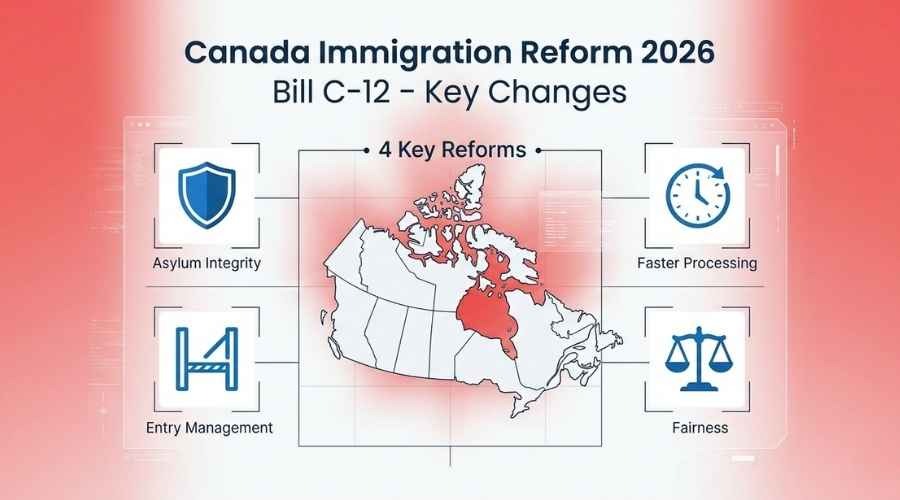
Canada has officially taken a major step toward strengthening its immigration system. On March 26, 2026, Bill C-12 received Royal Assent, marking a significant shift in how immigration and asylum applications are handled across the country.

This new law focuses on improving efficiency, tightening security, and ensuring fairness—while also addressing long-standing issues such as processing delays and misuse of asylum pathways.

In this blog, we’ll explore the 4 key reform areas of Bill C-12, what they mean in practice, and how they will impact future applicants.

What is Bill C-12 and Why It Matters?

Bill C-12 is part of Canada’s ongoing effort to modernize its immigration system under Immigration, Refugees and Citizenship Canada (IRCC).

Over the past few years, Canada has experienced a surge in immigration and asylum applications, putting pressure on existing systems. This law aims to solve those challenges while maintaining Canada’s reputation as a welcoming destination.

The goal is not to reduce immigration—but to ensure that the system is efficient, fair, and protected from misuse.

The 4 Key Areas of Reform Under Bill C-12

1. Stronger Asylum System Integrity

Bill C-12 introduces stricter measures to protect Canada’s asylum system from misuse and fraudulent claims. Authorities will now have better tools to quickly identify applications that do not meet genuine refugee criteria, helping prevent system abuse.

At the same time, the law ensures that legitimate asylum seekers are not negatively affected. By reducing false or weak claims, genuine refugees can receive faster decisions and better support upon arrival.

This change is expected to significantly reduce backlogs in asylum processing, creating a more balanced and effective system that prioritizes those truly in need of protection.

2. Faster Processing and Reduced Backlogs

One of the biggest improvements under Bill C-12 is the focus on speeding up immigration processing times. Canada has faced delays across multiple visa categories, and this law introduces modern solutions to address those issues.

Through increased digitization, automation, and better case management systems, applications will be processed more efficiently. This means fewer delays for study permits, work permits, and permanent residency applications.

Additionally, resources within IRCC are expected to be better allocated, ensuring that high-demand categories are handled quickly while maintaining accuracy and fairness in decision-making.

3. Enhanced Border and Entry Management

The new law strengthens Canada’s border control measures to ensure that all entries into the country are properly monitored and regulated. This includes improved coordination between immigration authorities and border enforcement agencies like the Canada Border Services Agency (CBSA).

With enhanced screening procedures, individuals entering Canada will undergo more thorough checks to verify their purpose of travel and eligibility. This reduces the risk of unauthorized entry or misuse of temporary visas.

At the same time, these improvements help maintain national security while ensuring that genuine travelers, students, and workers can enter Canada smoothly without unnecessary delays.

4. Fairness and Accountability in Decision-Making

Bill C-12 places strong emphasis on making immigration decisions more transparent and consistent. Applicants will benefit from clearer communication regarding application outcomes and reasons for approval or refusal.

The law also introduces improvements in how appeals and reviews are handled, ensuring that applicants have fair opportunities to challenge decisions if necessary. This increases trust in the overall system.

By standardizing decision-making processes, Canada aims to reduce inconsistencies and ensure that every applicant is treated equally, regardless of their country of origin or application type.

What This Means for Immigrants and Applicants

1. Stricter Screening but Faster Decisions

Applicants should expect more detailed background checks and verification processes, especially in categories prone to misuse. However, these stricter checks are balanced with faster processing systems that reduce waiting times.

This means genuine applicants will benefit the most, as their applications will move through the system more quickly and with fewer delays compared to previous years.

Overall, the process becomes more competitive—but also more efficient for those who are well-prepared.

2. Higher Standards for Genuine Applicants

Canada is clearly shifting toward prioritizing applicants who have clear intentions and strong documentation. This includes students with relevant academic plans, workers with valid job offers, and immigrants with genuine long-term goals.

Incomplete, inconsistent, or weak applications are more likely to face rejection under the new system. This makes preparation and accuracy more important than ever before.

For serious applicants, however, these changes improve overall approval chances by reducing competition from non-genuine cases.

3. Reduced Misuse of Immigration Pathways

The new law aims to close loopholes that were previously used to misuse asylum or temporary visa programs. This ensures that immigration pathways are used for their intended purposes only.

By limiting misuse, Canada can better manage application volumes and provide faster services to those who genuinely qualify.

This also helps maintain the integrity and global reputation of Canada’s immigration system.

How This Impacts Students and Workers

Although Bill C-12 mainly targets system efficiency and asylum reforms, its impact extends to international students and skilled workers.

Students may experience faster visa decisions but should be prepared for stricter documentation and credibility checks. Clear study plans and financial proof will be essential.

Similarly, workers and permanent residence applicants may benefit from reduced processing times, but only if their applications meet all eligibility criteria accurately and honestly.

Why Canada Introduced Bill C-12

There are several reasons behind this major reform:

  • A sharp increase in immigration and asylum applications in recent years
  • Growing backlogs causing delays across multiple visa categories
  • Concerns about misuse of refugee and temporary visa systems
  • The need to maintain public trust and system transparency

Ultimately, Canada aims to create a system that is both welcoming and well-controlled.

What Applicants Should Do Now

1. Prepare Strong Documentation

Make sure all documents—financial, academic, and personal—are accurate, complete, and verifiable. Even small inconsistencies can lead to delays or refusals under stricter rules.

2. Apply as Early as Possible

With high application volumes, early submission remains critical. Applying well in advance gives you enough time to handle unexpected delays or additional document requests.

3. Be Honest and Transparent

Providing truthful and consistent information is now more important than ever. Misrepresentation can lead to serious consequences, including bans from applying.

4. Stay Updated with Policy Changes

Immigration policies continue to evolve, so staying informed through official IRCC updates or professional advisors is essential for success.

Final Thoughts

Bill C-12 marks a major transformation in Canada’s immigration system in 2026. By focusing on integrity, efficiency, and fairness, the government aims to create a system that benefits genuine applicants while preventing misuse.

For those planning to move to Canada, the opportunity is still strong—but preparation is now the key to success.

Canada remains one of the world’s top destinations for students, workers, and immigrants—but in 2026, only well-prepared and genuine applicants will truly benefit from these opportunities.

Read More

February 17, 2026

The year 2026 is becoming one of the most important years in global immigration. Many countries are simultaneously facing labor shortages, aging populations, housing pressure, and economic changes. Because of this, governments are adjusting visa policies — some countries are making immigration easier, while others are tightening rules.

If you are planning to study abroad, work abroad, or apply for PR (permanent residency), understanding these changes is extremely important. A wrong plan based on old information can lead to visa refusal, financial loss, or even bans.

This guide explains the major immigration changes happening across the world in 2026 in a simple and practical way.

Why Immigration Rules Are Changing in 2026

Before discussing each country, you need to understand the real reason behind these changes.

Globally, countries are dealing with three major issues:

1. Labor Shortage
Many developed countries (Canada, Germany, UK, Australia, Japan) don’t have enough workers. Their local population is aging and fewer young people are entering the workforce.

2. Housing & Cost of Living Crisis
Countries like Canada, UK, and Australia received too many newcomers after COVID-19 reopening. Housing prices increased sharply, so governments are now trying to control immigration numbers.

3. Abuse of Student Visas
Some people used student visas mainly as a pathway to work illegally or stay permanently. Because of this, many countries are now verifying students more strictly.

So the new policies in 2026 are basically:
“We still need immigrants — but we want genuine and qualified applicants.”

Canada — Controlled Student Entry, More Focus on PR Candidates

Canada remains one of the top destinations, but 2026 marks a turning point. The government is trying to balance housing pressure and worker shortage at the same time.

What Changed in 2026

Policy Area New Direction What It Means for Applicants
Student Intake Limited intake numbers Fewer study permits approved
Colleges Restrictions on low-quality private colleges Choosing the wrong college = high refusal risk
Financial Proof Increased living cost requirement Stronger bank documentation needed
PR Pathway More provincial nomination importance PR easier through skilled job, not just study
Work Demand Skilled trades prioritized Electricians, healthcare, construction in demand

Real Impact

Earlier, many students used small colleges just to enter Canada.
Now Canada wants career-oriented students and workers who can stay long-term.

United Kingdom — Student Route Still Open, But Settlement Harder

The UK didn’t close its doors — it changed its priorities.

The government found that too many applicants were using the student visa mainly to bring family members and settle quickly. So the system was redesigned.

UK Immigration Update

Policy 2026 Rule Effect
Student Dependents Mostly restricted Students cannot easily bring spouse/children
Work Visa Higher salary threshold Only skilled jobs qualify
Universities Compliance checks increased Low-ranked colleges risky
Graduate Route Still active 2-year post-study work allowed
Financial Requirement Strict verification Fake sponsorship easily detected

Real Impact

If your goal is education and career, the UK is still excellent.
If your goal is quick settlement, it has become difficult.

Students admitted to recognized universities still have strong success chances.

Australia — Genuine Student Requirement

Australia introduced the most important immigration concept of 2026:

You must prove you are a real student, not a disguised worker.

Australia Policy Changes

Area New Rule Visa Officer Focus
GSR (Genuine Student Requirement) Mandatory Why this course? Why Australia?
SOP Review Deep analysis Career relevance checked
Finances Verified carefully Source of funds examined
Course Matching Important Irrelevant courses often refused
Work Motivation Negative factor Work-focused answers risk refusal

Real Impact

In 2026, Australia visas depend heavily on:

  • Study background

  • Career plan

  • Interview answers

Random course selection is now one of the top refusal reasons.

United States — Credibility-Based Visa System

The USA did not reduce student visas, but it increased scrutiny.
Instead of document-based approval, the US mainly relies on the interview decision.

USA 2026 Changes

Section Update Meaning
Interview More detailed questions Officer checks confidence & clarity
Funding Verified strongly Sponsor credibility important
SEVIS Monitoring Strict Attendance matters
OPT Remains available Major job opportunity
STEM Programs Encouraged Tech & engineering preferred

Real Impact

The US visa depends on one thing:
Your explanation of your future plan.

Students with clear academic goals continue to succeed.

Germany & Europe — The Most Open Immigration System in 2026

While English-speaking countries tightened student entry, Europe moved in the opposite direction.

Germany especially faces a massive labor shortage and is actively attracting foreigners.

Germany & Europe Update

Policy New Opportunity Benefit
Opportunity Card Points-based job seeker visa Enter Germany without job offer
Student Work Increased work hours Earn during study
Tuition Fees Very low Affordable education
PR Pathway Faster for workers Settlement opportunity
Language Flexible in some sectors English programs available

Real Impact

Europe has become the top alternative destination for students rejected elsewhere.

Germany is now popular because:

  • Low cost

  • Legal work

  • Residency pathway

UAE & Saudi Arabia — Long-Term Residency Model

The Middle East is transforming from a temporary worker region into a permanent expat living destination.

Middle East Changes

Country Program What It Offers
UAE Golden Visa 5–10 year residence
UAE Skilled Worker Visa Professional job residence
Saudi Arabia Premium Residency Long-term stay rights
Saudi Arabia Property Ownership Foreigners allowed investment
Both Business Visas Entrepreneur opportunities

Real Impact

These countries now target:

  • Entrepreneurs

  • Investors

  • Professionals

It is no longer only a short-term labor migration region.

Asia — Emerging Study Destinations

Asian countries are quietly becoming strong competitors in international education.

Asia Immigration Updates

Country New Attraction Advantage
Japan English programs Work after study
South Korea Tech education Scholarships
Malaysia Affordable tuition Easy visa processing
Japan/Korea Worker visas Aging population demand

Real Impact: Students who cannot afford Western countries now have realistic and legal options in Asia.

Biggest Global Trend in 2026

Across almost every country, immigration policies now follow one principle:

Quality over Quantity

Governments now check:

  • Genuine student intention

  • Academic background

  • Financial stability

  • Career relevance

  • English proficiency

  • Documentation authenticity

Fake documents, weak SOPs, and random course selection are now the main reasons for visa refusal worldwide.

How Applicants Should Prepare in 2026

If you are planning to apply abroad this year, you must change your strategy.

You should:

  • Choose course relevant to your previous study

  • Prepare a strong SOP

  • Show real financial documents

  • Select recognized institutions

  • Have a clear career plan

You should NOT:

  • Apply randomly

  • Change study field without explanation

  • Submit fake bank statements

  • Depend only on agents

Final Thoughts

Immigration is not ending in 2026 — it is evolving.

Countries still need immigrants, students, and skilled workers. But now they want serious, qualified, and genuine applicants.

For prepared candidates, 2026 may actually be one of the best opportunities in recent years.
For unprepared applicants, it may become the most difficult time.

So success now depends less on luck and more on planning, documentation, and strategy.

Read More

October 20, 2025

The United Kingdom has announced a major update to its immigration rules by raising the English-language requirement for many visa categories. This change is part of the government’s long-term plan to strengthen integration, improve workplace communication, and ensure that newcomers can participate more effectively in UK society. While the policy is aimed at improving outcomes, it also creates new challenges for applicants who are planning to work, study, or settle in the country.

What Has Changed?

Until now, many UK visa categories — especially work-related routes — accepted English proficiency at the B1 level. Under the new rules, the required level will increase to B2 for a significant number of applicants. This means that applicants will need stronger listening, speaking, reading, and writing skills than before.

In addition to main applicants, adult dependants will now also face English requirements. Those joining family members in the UK will be required to show a basic level of English at the time of entry, and gradually meet higher standards when extending their visa or applying for settlement.

What Is the Difference Between B1 and B2?

To understand the impact, it helps to break down the language levels:

Level Meaning Skill Expectation
B1 – Intermediate Can handle everyday communication and familiar topics Suitable for basic work and social situations
B2 – Upper-Intermediate Can understand complex ideas and interact fluently Suitable for professional environments and deeper communication

The jump from B1 to B2 is significant. A B2 speaker must be able to express opinions, explain ideas clearly, interact confidently with native speakers, and understand more advanced language in the workplace.

Who Will Be Affected?

The new English-language rules will apply to:

  • Skilled Worker Visa applicants

  • Other professional or work-based visa routes

  • Adult dependants of workers and students

  • Applicants aiming for long-term residence or settlement

Anyone planning a UK immigration pathway that leads to employment or permanent settlement should be prepared for a higher language standard.

Implications for Applicants & Employers

This policy shift has direct consequences for both migrants and UK employers.

For Applicants:
Immigrants will need more preparation before applying, as the bar for acceptable English has been raised. Some candidates may need additional language training or may have to sit for their exams multiple times. The process might become more time-consuming and costly, but meeting the standard will improve communication confidence and workplace readiness once in the UK.

For Employers:
UK companies hiring from abroad must now ensure that international candidates meet the new language criteria before sponsorship. While this adds an extra layer of screening, it also ensures that future employees will require less language support and will integrate more smoothly into professional environments. Employers may face a slightly reduced talent pool but potentially gain stronger long-term hires with better communication skills.

Why Is the UK Making This Change?

The UK government says the higher English requirement is intended to:

  • Support better integration into British society

  • Improve communication in the workplace

  • Reduce pressure on public services

  • Encourage migrants who are ready for long-term contribution and settlement

In short, the government wants newcomers who can adapt quickly, work confidently, and fully participate in community life.

What Does This Mean for Applicants?

For many people, this change means extra preparation and planning. Meeting the B2 requirement may require:

  • More intensive English study

  • Longer preparation time before applying

  • Additional test attempts if a first attempt falls short

Applicants will need to prove their English level through an approved test or an accepted educational qualification taught in English.

If you plan to bring your family, remember that adult dependants will also need to prepare, which may affect your application timeline.

Tips for Future UK Visa Applicants

If you are planning to apply under a UK work or settlement route, here are some smart steps to take now:

  1. Assess your current English level — Find out whether you are closer to B1 or B2.

  2. Start improving early — Don’t wait until the application stage to begin preparing.

  3. Practice all four skills — Focus on speaking and writing, as these are where most applicants struggle.

  4. Plan for dependants — If you are bringing a spouse or adult family member, ensure they begin learning early.

  5. Apply sooner if eligible — If you meet current rules, consider whether early application benefits you before the changes take effect.

Conclusion

The UK’s move to raise English-language requirements marks a major shift in its immigration system. While it raises the bar for applicants, it also reflects the country’s expectation that migrants will contribute actively to society and the workplace. With proper preparation and early planning, applicants can still achieve their UK goals — but waiting until the last moment could lead to delays, setbacks, or missed opportunities.

If you or your dependants are planning to apply for a UK visa, now is the time to prepare, improve your English skills, and review your application strategy. A well-planned approach today will save time, stress, and cost in the future.

Read More

September 22, 2025

The United States has long been a top destination for skilled professionals from around the world, especially through the H-1B visa program. But with the Trump administration’s latest move, the landscape for employers and international talent may be changing dramatically. A new policy introduces a $100,000 fee for companies sponsoring certain skilled worker visa applicants. This shift could reshape hiring strategies, impact global talent flows, and raise important questions about the future of U.S. immigration.

What’s Changing

Under the new rule, employers who file new H-1B petitions for workers outside the United States will be required to pay an additional $100,000 fee.

Key points to note:

  • The fee applies to new applications, not renewals.

  • Skilled workers already in the U.S. on H-1B visas are not directly affected.

  • The policy took effect in September 2025.

  • Employers must prove payment as part of the petition process.

This is on top of existing filing fees, making the cost of sponsoring skilled workers significantly higher.

Why the Change?

The stated goal is to:

  • Protect U.S. jobs by making it more expensive to hire foreign talent.

  • Reduce alleged “abuse” of the H-1B system by outsourcing firms.

  • Encourage higher wages and investment in American workers.

Supporters see this as a way to prioritize U.S. workers, while critics argue it could harm innovation and competitiveness.

Impact on Employers

For businesses, this policy is a game changer.

  • Higher Costs: What used to cost a few thousand dollars now requires a six-figure investment.

  • Strategic Hiring: Companies may reserve H-1B sponsorships for only the most critical, senior, or highly specialized roles.

  • Startups & Small Firms: Smaller businesses will feel the burden most, as many cannot afford the added cost.

  • Global Competition: Employers may consider shifting jobs overseas or relying more on remote work solutions.

Impact on Skilled Workers

For international professionals seeking opportunities in the U.S., the picture is mixed.

  • Fewer Opportunities: Companies may cut back on sponsoring foreign workers.

  • Selective Hiring: H-1Bs may go primarily to top-tier talent where the fee can be justified.

  • Increased Uncertainty: Visa sponsorship could become harder to secure, especially for entry-level or less specialized roles.

  • Alternative Routes: Applicants may need to explore other visa categories or consider destinations outside the U.S.

Pros and Cons

Pros

  • Encourages higher wages for U.S. workers.

  • Reduces misuse of the H-1B system.

  • Directs H-1B visas toward truly specialized positions.

Cons

  • Creates barriers for global talent.

  • Puts heavy financial strain on smaller businesses.

  • Risks pushing jobs and innovation outside the U.S.

What Employers and Applicants Should Do

  1. Review pending and future petitions to determine if the new fee applies.

  2. Plan budgets accordingly, especially if hiring from abroad.

  3. Consult with immigration experts to explore alternative visa pathways.

  4. Communicate with prospective hires about costs, timelines, and expectations.

  5. Stay updated, as policies may evolve with legal challenges or future adjustments.

Conclusion

The $100,000 fee for skilled worker visa applications marks a major shift in U.S. immigration policy. While designed to protect American workers, it also places new burdens on global businesses and international professionals. For employers, the challenge is balancing cost with the need for top talent. For skilled workers, the challenge is navigating a tougher path to opportunities in the U.S.

Read More