Loading...
Hi, How Can We Help You?

Tag Archives: Visa

January 14, 2026

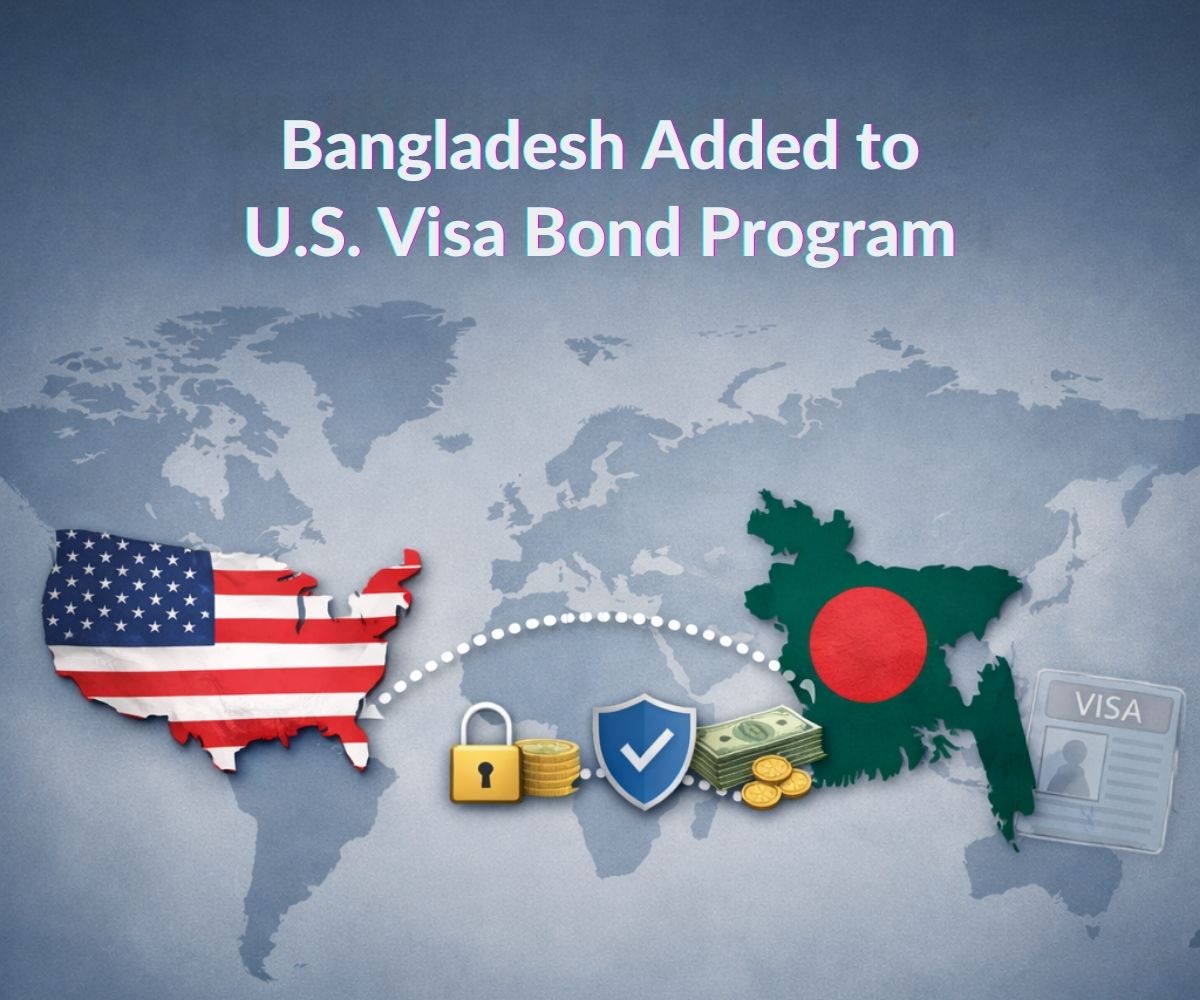
The United States has introduced a new immigration control measure that directly affects Bangladeshi travelers. Under a newly expanded U.S. visa bond program, Bangladesh has been added to the list of countries whose citizens may be required to deposit a refundable security bond before receiving certain U.S. visas.

If you are planning to travel to the U.S. for tourism or business, this update is critical. The rule does not apply to everyone, but for many Bangladeshi applicants, it changes how U.S. visas will be assessed going forward.

This article explains the U.S. visa bond for Bangladesh from a practical, applicant-focused perspective—what it means, why it matters, and how to prepare.

Why the U.S. Visa Bond Policy Now Includes Bangladesh

From the U.S. government’s perspective, visa overstays remain a serious challenge. Many travelers enter the country legally but fail to depart when their authorized stay ends. To address this, U.S. authorities are testing financial safeguards rather than imposing outright visa bans.

Bangladesh’s inclusion in the program reflects compliance data trends, not the intent of individual travelers. Most Bangladeshi visitors return home on time, but policy decisions are made based on overall statistics, not personal credibility.

In simple terms, the U.S. visa bond is designed to encourage timely departure, not to block travel.

What Is the U.S. Visa Bond for Bangladesh?

The U.S. visa bond for Bangladesh is a refundable financial deposit that may be required from Bangladeshi citizens applying for:

  • B-1 Business Visitor Visa

  • B-2 Tourist Visitor Visa

The bond acts as a guarantee that the traveler will:

  • Follow all visa conditions

  • Leave the United States before their authorized stay expires

If the traveler complies fully, the bond is returned. If not, the bond can be forfeited.

How Much Is the Visa Bond for Bangladeshi Applicants?

The bond amount is not fixed for everyone. A U.S. consular officer determines it based on the applicant’s profile.

Possible bond amounts include:

  • USD 5,000

  • USD 10,000

  • USD 15,000 (approximately BDT 18–19 lakh)

This amount is in addition to regular visa fees and must be paid through authorized U.S. government channels only.

Importantly, paying the bond does not guarantee visa approval.

How This Policy Changes U.S. Visa Applications from Bangladesh

Strong Documentation Is Now Essential

With the visa bond system in place, U.S. officers will look more closely at:

  • Stable employment or business income

  • Clear travel purpose

  • Previous international travel history

  • Family, property, or financial ties to Bangladesh

Applicants with weak documentation may face higher bond requirements—or refusal.

Travel Plans Must Be Clear and Realistic

Vague travel plans are now risky. Bangladeshi applicants should be prepared with:

  • A clear itinerary

  • Defined travel dates

  • Proof of return plans

The stronger your return justification, the lower your perceived risk.

Limited Entry and Exit Airports

Travelers required to post a visa bond must enter and exit the U.S. only through:

  • John F. Kennedy (New York)

  • Logan International Airport (Boston)

  • Dulles International Airport (Washington, DC)

Using other airports could affect exit records and delay or jeopardize bond refunds.

When Will Bangladeshi Travelers Get the Bond Back?

The bond is refunded if:

  • You leave the U.S. on or before your authorized stay ends

  • You fully comply with visa conditions

  • Your departure is properly recorded

Failure to meet these conditions can result in loss of the bond and future visa complications.

What This Means for Bangladeshi Families and Businesses

Business Visitors (B-1)
  • Short-term training, meetings, or negotiations must be well-documented

  • Company credentials and financial records are critical

  • Informal or verbal invitations may no longer suffice

Family & Tourist Visitors (B-2)
  • Family-based visits must clearly prove temporary intent

  • Sponsors in the U.S. do not eliminate the bond requirement

  • Property, employment, and dependents in Bangladesh become key evidence

Why Professional Visa Guidance Matters More Than Ever

With large sums of money involved, mistakes are costly. Incorrect payments, poor documentation, or misunderstandings about entry rules can result in unnecessary financial loss.

An experienced visa consultancy can:

  • Assess bond risk before application

  • Strengthen your travel profile

  • Ensure lawful payment procedures

  • Protect your refund eligibility

In today’s environment, professional guidance is not a luxury—it is a safeguard.

Final Thoughts

The U.S. visa bond for Bangladesh is a clear sign that U.S. immigration policy is becoming more compliance-driven. While it raises the bar, it does not close the door.

Bangladeshi travelers who plan carefully, document honestly, and follow the rules can still visit the United States—and recover their bond without issue.

Preparation, not fear, is the key.
Read More

October 20, 2025

The United Kingdom has announced a major update to its immigration rules by raising the English-language requirement for many visa categories. This change is part of the government’s long-term plan to strengthen integration, improve workplace communication, and ensure that newcomers can participate more effectively in UK society. While the policy is aimed at improving outcomes, it also creates new challenges for applicants who are planning to work, study, or settle in the country.

What Has Changed?

Until now, many UK visa categories — especially work-related routes — accepted English proficiency at the B1 level. Under the new rules, the required level will increase to B2 for a significant number of applicants. This means that applicants will need stronger listening, speaking, reading, and writing skills than before.

In addition to main applicants, adult dependants will now also face English requirements. Those joining family members in the UK will be required to show a basic level of English at the time of entry, and gradually meet higher standards when extending their visa or applying for settlement.

What Is the Difference Between B1 and B2?

To understand the impact, it helps to break down the language levels:

Level Meaning Skill Expectation
B1 – Intermediate Can handle everyday communication and familiar topics Suitable for basic work and social situations
B2 – Upper-Intermediate Can understand complex ideas and interact fluently Suitable for professional environments and deeper communication

The jump from B1 to B2 is significant. A B2 speaker must be able to express opinions, explain ideas clearly, interact confidently with native speakers, and understand more advanced language in the workplace.

Who Will Be Affected?

The new English-language rules will apply to:

  • Skilled Worker Visa applicants

  • Other professional or work-based visa routes

  • Adult dependants of workers and students

  • Applicants aiming for long-term residence or settlement

Anyone planning a UK immigration pathway that leads to employment or permanent settlement should be prepared for a higher language standard.

Implications for Applicants & Employers

This policy shift has direct consequences for both migrants and UK employers.

For Applicants:
Immigrants will need more preparation before applying, as the bar for acceptable English has been raised. Some candidates may need additional language training or may have to sit for their exams multiple times. The process might become more time-consuming and costly, but meeting the standard will improve communication confidence and workplace readiness once in the UK.

For Employers:
UK companies hiring from abroad must now ensure that international candidates meet the new language criteria before sponsorship. While this adds an extra layer of screening, it also ensures that future employees will require less language support and will integrate more smoothly into professional environments. Employers may face a slightly reduced talent pool but potentially gain stronger long-term hires with better communication skills.

Why Is the UK Making This Change?

The UK government says the higher English requirement is intended to:

  • Support better integration into British society

  • Improve communication in the workplace

  • Reduce pressure on public services

  • Encourage migrants who are ready for long-term contribution and settlement

In short, the government wants newcomers who can adapt quickly, work confidently, and fully participate in community life.

What Does This Mean for Applicants?

For many people, this change means extra preparation and planning. Meeting the B2 requirement may require:

  • More intensive English study

  • Longer preparation time before applying

  • Additional test attempts if a first attempt falls short

Applicants will need to prove their English level through an approved test or an accepted educational qualification taught in English.

If you plan to bring your family, remember that adult dependants will also need to prepare, which may affect your application timeline.

Tips for Future UK Visa Applicants

If you are planning to apply under a UK work or settlement route, here are some smart steps to take now:

  1. Assess your current English level — Find out whether you are closer to B1 or B2.

  2. Start improving early — Don’t wait until the application stage to begin preparing.

  3. Practice all four skills — Focus on speaking and writing, as these are where most applicants struggle.

  4. Plan for dependants — If you are bringing a spouse or adult family member, ensure they begin learning early.

  5. Apply sooner if eligible — If you meet current rules, consider whether early application benefits you before the changes take effect.

Conclusion

The UK’s move to raise English-language requirements marks a major shift in its immigration system. While it raises the bar for applicants, it also reflects the country’s expectation that migrants will contribute actively to society and the workplace. With proper preparation and early planning, applicants can still achieve their UK goals — but waiting until the last moment could lead to delays, setbacks, or missed opportunities.

If you or your dependants are planning to apply for a UK visa, now is the time to prepare, improve your English skills, and review your application strategy. A well-planned approach today will save time, stress, and cost in the future.

Read More

September 22, 2025

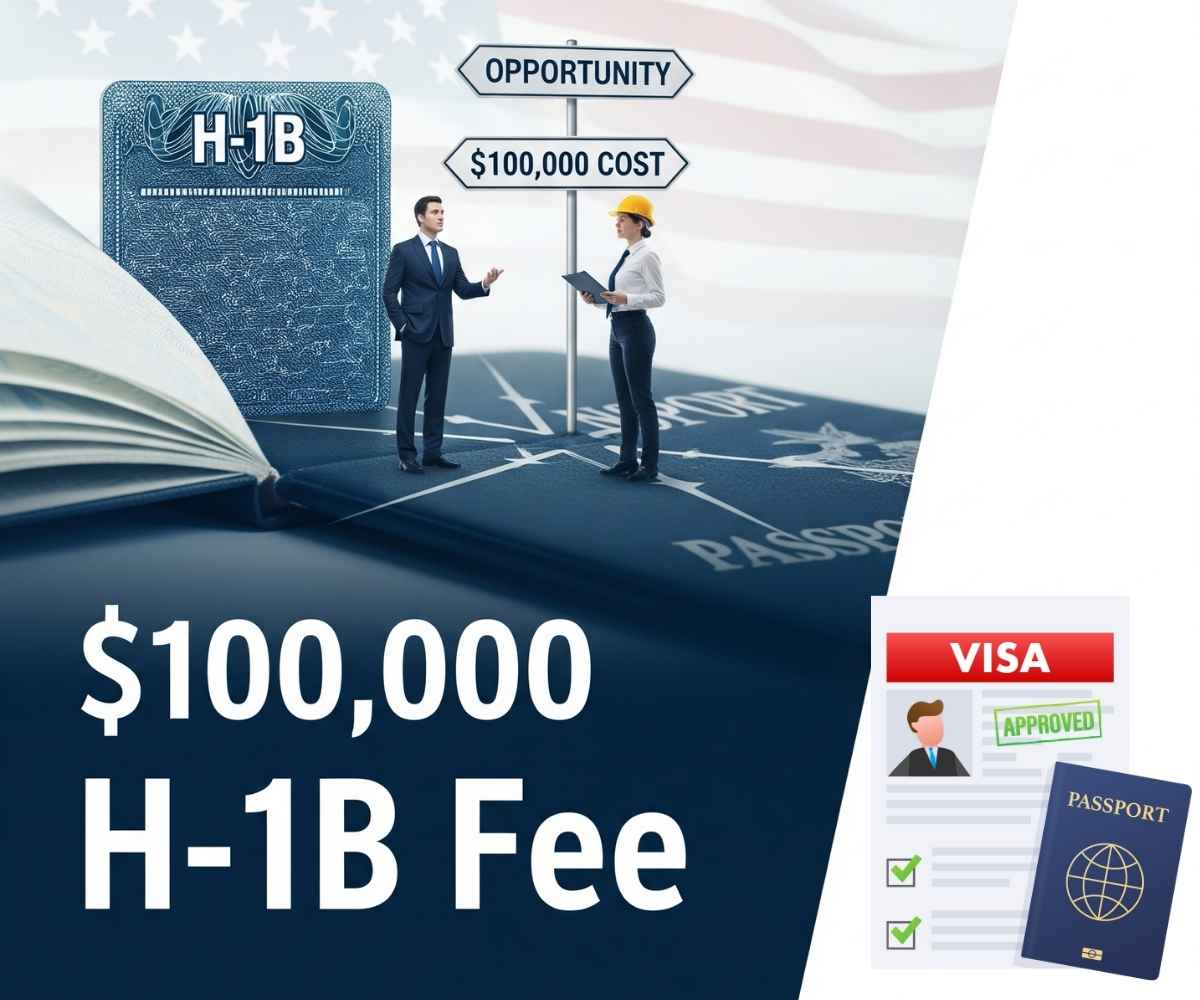
The United States has long been a top destination for skilled professionals from around the world, especially through the H-1B visa program. But with the Trump administration’s latest move, the landscape for employers and international talent may be changing dramatically. A new policy introduces a $100,000 fee for companies sponsoring certain skilled worker visa applicants. This shift could reshape hiring strategies, impact global talent flows, and raise important questions about the future of U.S. immigration.

What’s Changing

Under the new rule, employers who file new H-1B petitions for workers outside the United States will be required to pay an additional $100,000 fee.

Key points to note:

  • The fee applies to new applications, not renewals.

  • Skilled workers already in the U.S. on H-1B visas are not directly affected.

  • The policy took effect in September 2025.

  • Employers must prove payment as part of the petition process.

This is on top of existing filing fees, making the cost of sponsoring skilled workers significantly higher.

Why the Change?

The stated goal is to:

  • Protect U.S. jobs by making it more expensive to hire foreign talent.

  • Reduce alleged “abuse” of the H-1B system by outsourcing firms.

  • Encourage higher wages and investment in American workers.

Supporters see this as a way to prioritize U.S. workers, while critics argue it could harm innovation and competitiveness.

Impact on Employers

For businesses, this policy is a game changer.

  • Higher Costs: What used to cost a few thousand dollars now requires a six-figure investment.

  • Strategic Hiring: Companies may reserve H-1B sponsorships for only the most critical, senior, or highly specialized roles.

  • Startups & Small Firms: Smaller businesses will feel the burden most, as many cannot afford the added cost.

  • Global Competition: Employers may consider shifting jobs overseas or relying more on remote work solutions.

Impact on Skilled Workers

For international professionals seeking opportunities in the U.S., the picture is mixed.

  • Fewer Opportunities: Companies may cut back on sponsoring foreign workers.

  • Selective Hiring: H-1Bs may go primarily to top-tier talent where the fee can be justified.

  • Increased Uncertainty: Visa sponsorship could become harder to secure, especially for entry-level or less specialized roles.

  • Alternative Routes: Applicants may need to explore other visa categories or consider destinations outside the U.S.

Pros and Cons

Pros

  • Encourages higher wages for U.S. workers.

  • Reduces misuse of the H-1B system.

  • Directs H-1B visas toward truly specialized positions.

Cons

  • Creates barriers for global talent.

  • Puts heavy financial strain on smaller businesses.

  • Risks pushing jobs and innovation outside the U.S.

What Employers and Applicants Should Do

  1. Review pending and future petitions to determine if the new fee applies.

  2. Plan budgets accordingly, especially if hiring from abroad.

  3. Consult with immigration experts to explore alternative visa pathways.

  4. Communicate with prospective hires about costs, timelines, and expectations.

  5. Stay updated, as policies may evolve with legal challenges or future adjustments.

Conclusion

The $100,000 fee for skilled worker visa applications marks a major shift in U.S. immigration policy. While designed to protect American workers, it also places new burdens on global businesses and international professionals. For employers, the challenge is balancing cost with the need for top talent. For skilled workers, the challenge is navigating a tougher path to opportunities in the U.S.

Read More

August 29, 2025
August 29, 2025

The International English Language Testing System (IELTS) is one of the most widely accepted methods of assessing English language proficiency. It has four sections: Listening, Reading, Writing, and Speaking. Among these, the Speaking test often feels the most challenging for candidates.

Many test-takers believe that fluency, vocabulary, and grammar are enough to score high. However, despite having strong English skills, many candidates remain stuck at Band 6 or lower in Speaking. Why? The missing piece is often Pronunciation—a crucial but overlooked factor that makes up 25% of the IELTS Speaking score.

In this blog, we will explore why pronunciation matters, common mistakes candidates make, and practical ways to improve it for a higher IELTS Speaking score.

Why Pronunciation Matters in IELTS Speaking

A common misconception is that you need a British or American accent to score well in pronunciation. In reality, IELTS does not test your accent. Instead, examiners focus on whether:

  • You can be understood clearly,

  • You use a natural tone,

  • You place the right emphasis on words and sentences.

Even with strong grammar and vocabulary, unclear pronunciation can make your answers difficult to understand—leading to a lower band score.

Key Aspects of Pronunciation in IELTS Speaking

1. Correct Pronunciation of Sounds (Phonemes)

Some English sounds do not exist in other languages like Bengali, which often leads to mistakes. For example, confusing “v” and “b” or “ship” and “sheep.” Such errors can change meanings and affect clarity.

How to Improve:

  • Use tools like Cambridge Dictionary or Google Dictionary to listen to correct pronunciations.

  • Practice minimal pairs (e.g., “ship/sheep,” “bit/beat”) to sharpen your sound accuracy.

2. Word Stress – Emphasizing the Right Syllable

English words often have more than one syllable, and stressing the wrong syllable can make a word sound incorrect. For example:

  • CORrect (✔️) vs. corRECT (❌)

  • PREsent (noun) vs. preSENT (verb)

How to Practice:

  • When learning new words, always check the stress in a dictionary.

  • Listen to real examples on platforms like YouGlish and imitate them.

3. Sentence Stress – Emphasizing Key Words

In English, not all words in a sentence carry equal weight. Important words (nouns, verbs, adjectives) are stressed, while smaller words (articles, prepositions) are spoken more softly. For example:

👉 “I went to the store to buy some apples.”

How to Practice:

  • Read short sentences and underline the key words.

  • Record yourself and check if your stress matches natural English rhythm.

  • Practice in front of a mirror to improve clarity and confidence.

4. Intonation – Avoid Monotone Speech

Intonation is the rise and fall of your voice while speaking. Speaking in a flat, monotone voice makes your speech sound robotic and lowers your confidence.

For example:

  • Rising intonation → “Are you coming?”

  • Falling intonation → “I’m going home.”

  • Rise-fall intonation → “That’s amazing!”

Techniques to Improve Intonation:

  • Listen to native speakers and copy their tone.

  • Say the same sentence in different emotions (question, surprise, statement).

  • Record yourself to ensure you sound natural, not robotic.

5. Connected Speech – Linking Words Naturally

Native speakers often link words together instead of pronouncing them separately. For example:

  • “What are you doing?” → “Whatcha doin’?”

  • “I want to” → “I wanna.”

While you don’t need to force slang, speaking with connected flow instead of a robotic word-by-word delivery will make you sound more natural.

How to Practice:

  • Watch movies, TV shows, or YouTube videos of native speakers.

  • Immediately repeat and mimic their connected speech.

6. Clear Enunciation – Pronouncing Words Clearly

Even if you know advanced vocabulary, if you swallow your words or speak unclearly, the examiner won’t understand you. Clarity is more important than speed or accent.

How to Improve:

  • Record yourself and check if every word is clear.

  • Read aloud from news articles or TED Talk transcripts daily.

  • Mimic not just the words but also the style of native speakers.

Final Thoughts

Many IELTS candidates spend time memorizing vocabulary lists or practicing fluency drills, but they forget that pronunciation alone accounts for 25% of the Speaking score.

To score Band 7 or higher, remember:

  • Correct sounds matter.

  • Stress and intonation bring your speech to life.

  • Connected, clear, and natural speech makes you easy to understand.

The IELTS Speaking test is not about “what you say” but also “how you say it.” By focusing on pronunciation and practicing every day, you can improve your clarity, confidence, and overall score.

Pro Tip: Spend at least 15 minutes daily on pronunciation practice—record, listen, and adjust. Over time, you’ll sound more natural and confident, boosting your chances of achieving a higher band score.

Read More

August 11, 2025
August 11, 2025

The United States has introduced a visa bond program requiring travelers from certain countries to deposit up to $15,000 before being granted entry. This policy, announced by the U.S. Department of State, is part of broader immigration enforcement measures first pushed during former President Donald Trump’s administration.

Launched as a 12-month pilot program starting August 20, the U.S. visa security deposit aims to curb visa overstays, which have been a persistent challenge for immigration authorities.

What Is a USA Visa Bond?

A visa bond—also known as a visa security deposit—is a financial guarantee that ensures a visitor leaves the U.S. before their visa expires. If the traveler complies with all visa conditions, the bond is refunded; if they overstay or violate visa terms, the bond is forfeited.

The U.S. program includes three bond levels:

  • $5,000

  • $10,000

  • $15,000

The decision on how much a traveler must pay is made by U.S. consular officers during the visa application process. The officer evaluates factors such as:

  • Purpose of travel

  • Employment history

  • Monthly/annual income

  • Professional skills

  • Education level

Who Must Pay the U.S. Visa Bond?

This visa bond policy applies to:

  • B-1 Business Visitor Visa holders

  • B-2 Tourist Visa holders

It targets travelers from countries with historically high visa overstay rates. These are nations where a significant percentage of visitors fail to leave before their visa expires.

The pilot program’s initial focus includes:

  • Zambia

  • Malawi

However, U.S. immigration data shows that overstay rates are also high for travelers from Haiti, Laos, Myanmar, and Yemen, as well as several other African nations such as Chad and Eritrea.

Why Did the U.S. Introduce the Visa Bond Program?

The visa bond was introduced to address one of the biggest loopholes in U.S. immigration enforcement—visa overstays. Unlike illegal border crossings, visa overstays involve travelers who enter the U.S. legally but remain after their authorized period ends.

Key Statistics on U.S. Visa Overstays:
  • In 2023, out of nearly 39 million expected departures, about 400,000 travelers overstayed their visas.

  • A 2002 report by the Immigration and Naturalization Service (INS) found that 41% of undocumented immigrants were originally visa holders who stayed beyond their permitted time.

  • In 2003, data showed that 33% of undocumented immigrants in 2000 were visa overstayers.

These figures highlight the need for stronger measures, and the visa bond program is seen as a financial deterrent against violations.

How the U.S. Visa Bond Program Works

  1. Bond Determination – A U.S. consular officer assesses the applicant’s profile and sets a bond amount.

  2. Payment Before Travel – The traveler pays the bond before receiving the visa.

  3. Entry into the U.S. – The visitor travels under the terms of their visa.

  4. Refund Conditions – If the traveler leaves before the visa expires and follows all rules, the bond is refunded in full.

  5. Non-Compliance Consequences – Overstaying results in loss of the bond and potential visa bans.

History of the U.S. Visa Bond Program

  • 2020 – The U.S. announced plans to introduce a visa bond system targeting countries with high overstay rates.

  • COVID-19 Pandemic – The program was delayed and not fully implemented.

  • 2023–2024 Data – DHS reports continued high overstay rates in several countries.

  • August 20, Pilot Launch – The 12-month test program began, applying to select B-1 and B-2 visa applicants.

Support and Criticism

Supporters Say:
  • It will reduce illegal overstays.

  • It ensures only serious, genuine travelers apply.

  • It protects U.S. immigration integrity.

Critics Argue:
  • It creates a financial barrier for travelers from developing countries.

  • It may damage tourism and business travel relationships.

  • It unfairly targets specific nations.

Key Takeaways for Travelers

  • Check if Your Country Is on the List – Only certain countries are affected.

  • Prepare Financially – The bond can be up to $15,000 in addition to regular visa application fees.

  • Comply with All Rules – Leaving on time ensures you get your bond refunded.

  • Consider Timing – Since this is a pilot program, future adjustments are possible.

In Short: The U.S. Visa Bond Program is a high-stakes immigration measure designed to discourage overstays. While it may help reduce violations, it also raises questions about fairness, accessibility, and diplomatic impact.

Read More

July 14, 2025

Canada is known for its openness, multiculturalism, and traveler-friendly policies. In recent years, the Canadian government has taken steps to simplify entry procedures for select international travelers through visa waivers or Electronic Travel Authorization (eTA). As of 2025, travelers from several Asian countries can now visit Canada visa-free or with an eTA, making travel more accessible for tourism, short business trips, or visiting family.

In this blog, we explore the 10 Asian countries that currently benefit from visa-free access or simplified eTA entry to Canada, who qualifies, and what travelers need to know before they pack their bags.

What Is Visa-Free or eTA Travel to Canada?

Before we dive into the list, let’s clarify what visa-free travel means.

  • Visa-free: You do not need a visa to enter Canada if you meet specific conditions.

  • eTA (Electronic Travel Authorization): A quick, online travel permit required for visa-exempt nationals arriving by air.

For many Asian travelers, Canada offers visa-free travel if they have previously held a Canadian visa or currently hold a valid U.S. non-immigrant visa. These travelers can apply for an eTA instead of a full visa, saving both time and money.

10 Asian Countries Eligible for Visa-Free or eTA Entry to Canada (2025)

Here’s a list of countries whose nationals may travel to Canada visa-free or under the eTA system, subject to conditions.

1. Philippines
  • Eligible for eTA if the traveler held a Canadian visa in the last 10 years or currently holds a valid U.S. non-immigrant visa.

  • eTA is required for air travel.

2. Thailand
  • Thai nationals can apply for eTA if they meet the same criteria: past Canadian visa or current U.S. visa.

3. Indonesia
  • Indonesian travelers benefit from the eTA program under the same visa history conditions.

4. Vietnam
  • Citizens of Vietnam are eligible for an eTA under Canada’s expanded travel facilitation initiative (with valid travel history).

5. Malaysia
  • Malaysian passport holders who meet the criteria can now apply for an eTA to visit Canada.

6. India
  • Indian citizens with a valid U.S. visa or Canadian visa issued in the last 10 years can travel using an eTA.

  • Not visa-free for all Indian passport holders — must meet travel history conditions.

7. Taiwan
  • Taiwanese passport holders with a personal identification number (PIN) on their passport are already visa-exempt for short visits.

  • Still require eTA when flying to Canada.

8. South Korea
  • South Korean citizens do not need a visa and only need to apply for an eTA.

  • Considered a fully visa-exempt country.

9. Singapore
  • Singaporean passport holders enjoy visa-free access to Canada for short stays.

  • Only an eTA is needed when traveling by air.

10. Japan
  • Japan is a long-standing visa-exempt country.

  • Travelers need an eTA if arriving by air, but no visa is required for visits under 6 months.

Benefits of Visa-Free or eTA Entry

  • No embassy visits or interviews

  • Lower application costs (eTA costs only 7 CAD)

  • Faster approvals, usually within minutes to a few hours

  • Greater travel flexibility for students, businesspeople, and families

  • Improved tourism and cultural exchange with Canada

Eligibility Criteria: Do You Qualify?

To qualify for an eTA instead of a visa, you usually must:

✅ Be a citizen of one of the listed countries
✅ Have held a Canadian visa in the last 10 years or currently hold a valid U.S. non-immigrant visa
✅ Travel to Canada by air (eTA is not valid for land or sea entry)
✅ Have a valid biometric passport

👉 Check your eligibility on the official Canadian immigration site or consult with a visa expert like SchoolingVisa.

How to Apply for an eTA

  1. Visit the official Government of Canada eTA site

  2. Complete the online application

  3. Pay the CAD 7 fee

  4. Wait for approval (usually minutes to 72 hours)

  5. Get your eTA linked to your passport

Travel Tips for Visa-Free Visitors to Canada

  • Keep your return ticket & travel plans handy for immigration questioning

  • Get travel insurance for medical emergencies

  • Ensure your passport is valid for at least 6 months

  • Don’t overstay — eTA allows visits up to 6 months only

  • Avoid working or studying without the proper permits

Final Thoughts: A New Era for Asian Travelers to Canada

This expansion of visa-free or eTA eligibility reflects Canada’s commitment to building stronger ties with Asian countries. Whether you’re visiting Niagara Falls, studying in Toronto, or exploring Vancouver’s vibrant neighborhoods, the journey has never been easier.

If you’re unsure whether you qualify, or want help with your study permit, work visa, or visitor visa, the experts at  GlobalVisaNet are here to help you navigate every step.

Read More

July 3, 2025

A New Era for Portugal’s Golden Visa

Portugal’s Golden Visa program has long been one of the most popular residency-by-investment options in Europe. For years, international investors flocked to Portugal, enticed by its real estate-focused pathway, offering a relatively low-cost route to European residency, travel freedom, and eventual citizenship.

But as of 2025, the landscape has fundamentally shifted. Portugal has officially removed real estate as a qualifying investment. Instead, the government is refocusing the program toward more sustainable, economic, and cultural investments — a move that aligns with EU pressure and local housing needs.

Why Portugal Ended the Real Estate Route

The decision to end the real estate route stemmed from several critical factors:

  • Skyrocketing property prices in major cities like Lisbon and Porto, contributing to housing shortages for locals.

  • EU pressure on member states to reduce “residency-for-sale” models that inflate real estate markets.

  • Desire to channel foreign capital into productive sectors like tech, arts, education, and green industries.

As a result, Portugal eliminated real estate and capital transfers as eligible routes for the Golden Visa, officially closing this door in late 2023 and enforcing it fully by 2024.

What’s Replacing Real Estate in 2025?

Portugal’s Golden Visa in 2025 is built around three key alternatives:

1. Investment in Regulated Venture Capital Funds
  • Minimum Investment: €500,000

  • Focus: Portuguese venture capital funds that invest in startups, SMEs, tech, and innovation.

  • Benefit: Boosts local entrepreneurship while giving investors potential financial returns.

  • Processing Time: 6–9 months

  • Residency: Renewable 2-year permit, leading to PR or citizenship after 5 years (with minimum stay)

🟢 Why It’s Popular:

  • Diversifies investment beyond real estate
  • Funds are professionally managed
  • Supports Portugal’s startup and innovation ecosystem
2. Donations to Arts, Culture, and Heritage Projects
  • Minimum Donation: €250,000

  • Focus: Restoration of national heritage sites, funding of museums, theaters, or cultural institutions.

  • Residency Track: Same as above; donation qualifies applicant for residence permit.

  • Processing Time: ~6 months

🟢 Why It’s Unique:

  • Lower capital requirement
  • Ideal for philanthropically minded investors
  • Supports preservation of Portuguese identity
3. Scientific Research & Higher Education Funding
  • Minimum Donation: €500,000

  • Focus: Research institutions, universities, and development centers in Portugal.

  • Outcome: Encourages R&D and innovation; strengthens the country’s intellectual capital.

🟢 Good For:

  • Investors passionate about science, education, and long-term social impact

What’s Still Required in 2025?

Even with the investment changes, core Golden Visa criteria remain:

  • Clean criminal record

  • Health insurance valid in Portugal

  • Maintain qualifying investment for at least 5 years

  • Stay requirement: 7 days per year minimum (35 days over 5 years)

  • Basic Portuguese knowledge for citizenship after 5 years

Benefits of Portugal’s Golden Visa in 2025

  • Visa-free travel in Schengen Area

  • Access to EU healthcare and education

  • Path to citizenship after 5 years

  • Family reunification (spouse, children, dependent parents)

  • Minimal physical presence required

Who Should Apply in 2025?

  • Investors shifting away from real estate risk

  • Philanthropists and culture-focused individuals

  • Tech-savvy entrepreneurs looking for EU market access

  • Families seeking EU residency with a flexible lifestyle

Conclusion: Portugal’s Golden Visa Isn’t Gone — It’s Evolved

Portugal’s decision to exit the real estate route may have closed one door, but it has opened several others. The 2025 Golden Visa program is more aligned with sustainable development, economic growth, and cultural preservation. Investors now have an opportunity to not only gain European residency but also contribute meaningfully to Portugal’s future.

Whether you’re an entrepreneur, philanthropist, or global citizen, Portugal remains one of the most attractive gateways to Europe — just with a different key.

Read More

December 12, 2024
December 12, 2024

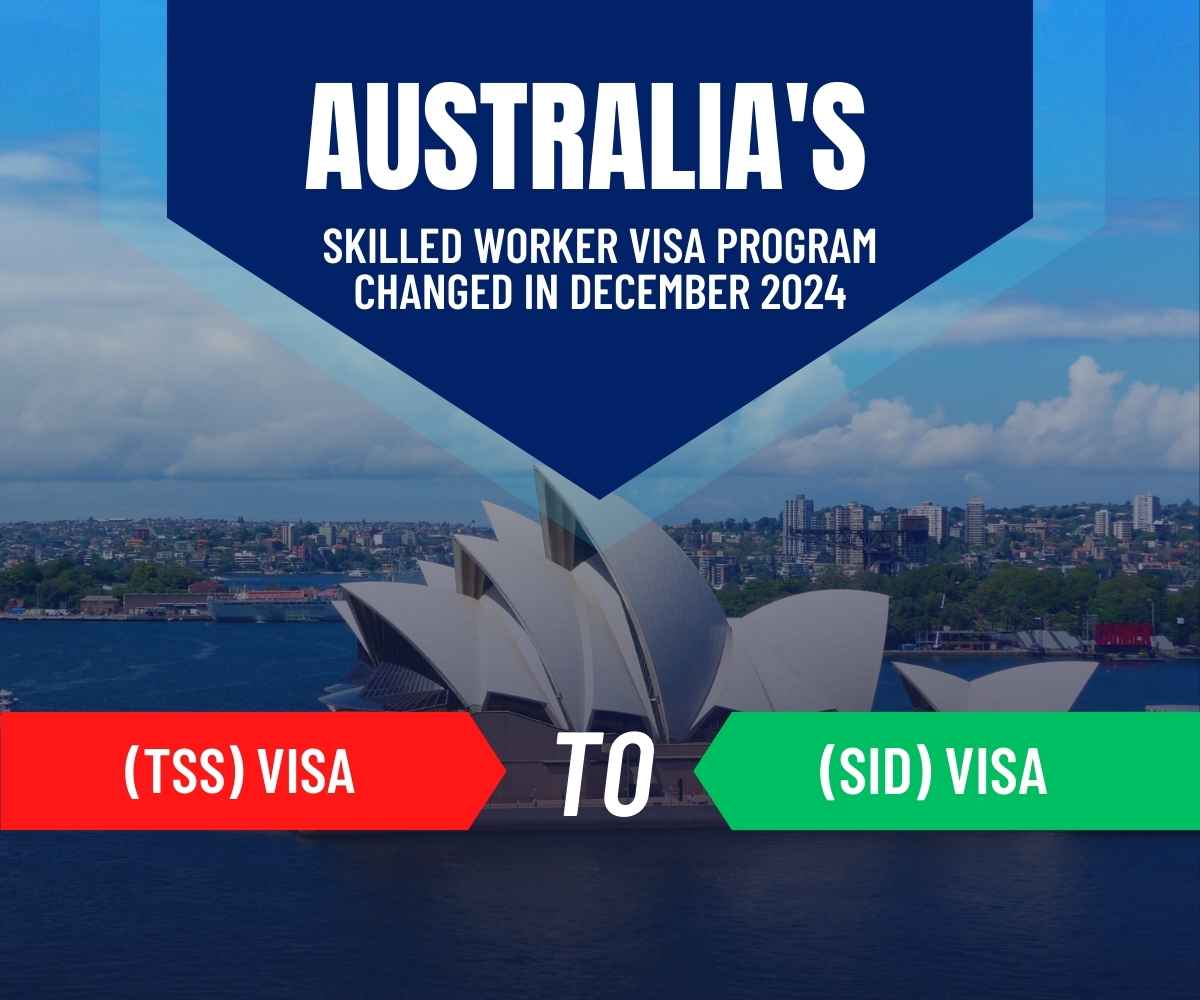
Australia is taking bold steps to reshape its skilled migration program with the introduction of the Skills in Demand (SID) visa (subclass 482). This new visa, set to replace the Temporary Skill Shortage (TSS) visa on December 7, 2024, is designed to streamline processes, expand pathways to permanent residency, and attract highly skilled professionals to meet the country’s workforce needs.

Key Changes:

  1. Core Skills Occupation List (CSOL):
    • The new visa introduces the CSOL, which replaces the previous occupation lists. It simplifies eligible occupations and provides access to both temporary and permanent residency pathways for 456 occupations.
  2. Streams Under the SID Visa:
    • Core Skills Stream: Requires occupations to be on the CSOL.
    • Specialist Skills Stream: Targets high-income earners (minimum $135,000 annually) in any occupation except trades, machinery operation, and labor.
    • Labour Agreement Stream: Retains the same structure as under the TSS visa, requiring specific agreements between employers and the government.
  3. Work Experience Requirements:
    • Reduced from 2 years to 1 year of relevant work experience, making the visa more accessible.
  4. Pathways to Permanent Residency:
    • More defined and expanded for eligible visa holders across streams.
  5. Eligibility and Salary Adjustments:
    • Annual indexation of salary thresholds (currently $73,150) applies. Sponsorship for some streams may require higher salaries depending on the occupation and stream.

Why the Change?

The transition from the TSS visa to the SID visa reflects Australia’s commitment to addressing skills shortages more effectively while simplifying migration processes. With the global competition for talent intensifying, these changes are intended to:

  • Attract top-tier professionals in high-demand sectors.
  • Ensure fairer and more transparent eligibility criteria.
  • Provide greater flexibility to industries and employers.

Comparison Between SID and TSS

Here’s a side-by-side comparison of the Skills in Demand (SID) visa (subclass 482) and the Temporary Skill Shortage (TSS) visa based on the latest updates:

Aspect Skills in Demand (SID) Visa Temporary Skill Shortage (TSS) Visa
Implementation Date Effective from December 7, 2024. Introduced in March 2018; being replaced by the SID visa.
Purpose Targets occupations with demonstrated demand, addressing critical shortages and simplifying pathways. Designed to address skill shortages temporarily for Australian employers.
Visa Structure Three-tier system: Specialist Skills, Core Skills, and Essential Skills pathways based on earnings and skills. Short-Term, Medium-Term, and Labor Agreement streams, with pathways tied to specific occupation lists.
Occupation Lists Consolidated Core Skills Occupation List (CSOL) applicable across tiers. Separate Short-Term Skilled Occupation List (STSOL) and Medium and Long-Term Strategic Skills List (MLTSSL).
Pathways to Permanent Residency Offers a more direct pathway to PR for Core and Specialist Skills pathways. PR available only for Medium-Term stream and certain agreements.
Minimum Salary Threshold Earnings determine eligibility under specific tiers (e.g., Core Skills AUD 70,000–135,000). No explicit salary threshold, but market salary rate applies for most streams.
Processing Priority Prioritizes critical and highly skilled roles under the Specialist Skills tier. Priority depends on occupation type and stream.
Skills Assessment Simplified skills assessment tailored to CSOL requirements. Skills assessment varies by occupation and is often more complex.
Duration of Stay Likely flexible and based on tier, with pathways to PR ensuring long-term solutions. Short-Term: up to 2 years; Medium-Term: up to 4 years; renewable.
Program Goals Focuses on innovation and long-term solutions to Australia’s workforce needs. Primarily aimed at filling immediate skill shortages temporarily.
Key Takeaways:
  • The SID visa offers a more streamlined approach by consolidating occupation lists and introducing flexible salary thresholds tied to skill levels.
  • Pathways to Permanent Residency are more accessible under the new framework.
  • The TSS visa had a more fragmented structure and was designed as a short-term solution, whereas the SID visa targets sustainable workforce planning.

Transitional Arrangements

Current TSS visa holders will not be affected by this change, but new applications under the TSS visa will cease once the SID visa is introduced. Employers and applicants are advised to stay informed and consult immigration professionals to navigate this transition.

How to Prepare for the SID Visa

If you’re a skilled worker or employer planning to utilize the SID visa, here are some steps to get started:

  1. Check the CSOL: Ensure your occupation is included in the list.
  2. Understand the Streams: Determine which stream aligns with your qualifications, salary, and work experience.
  3. Consult Experts: Seek professional advice to prepare your application and understand the latest requirements.
  4. Monitor Updates: Stay updated on developments from the Australian Department of Home Affairs.

Conclusion

The Skills in Demand visa marks a significant milestone in Australia’s migration framework. With its simplified structure, enhanced pathways to PR, and focus on high-demand skills, it promises to be a transformative tool for skilled migration. Whether you’re a professional seeking opportunities in Australia or an employer looking to fill critical workforce gaps, the SID visa is poised to open new doors.

Stay tuned for more updates as the December 2024 launch approaches, and take advantage of this exciting new opportunity to build a future in Australia!
Read More

December 10, 2024

Hungary has become a top choice for international students, offering exceptional education at highly affordable costs. With its rich cultural history, dynamic student life, and globally accredited universities, Hungary welcomes tens of thousands of students each year. The country boasts 25 universities and numerous colleges, providing diverse opportunities for students, even on a limited budget.

If you’re considering Hungary for your higher studies, here’s a detailed guide to the most cost-effective universities and available funding options.

Why Opt for Hungary for Higher Education?

Hungary’s education system is renowned for its quality and affordability. Tuition fees for international students are notably lower than in many Western European nations, making it a smart choice for students seeking top-notch education at a reasonable price.

Additionally, Hungary offers a low cost of living, allowing students to enjoy a comfortable lifestyle on a tight budget. Monthly expenses, including accommodation, transportation, and food, typically range between €500 and €700, ensuring a smooth and enjoyable academic journey.

Top Affordable Universities in Hungary

Here’s a list of some of the most affordable and high-ranking universities in Hungary:

  1. University of Pécs
    • One of Hungary’s oldest institutions, offering a wide array of programs in English.
    • Tuition Fees: Starting at €3,000–€5,000 per year for undergraduate programs.
  2. University of Szeged
    • Renowned for academic excellence and cutting-edge research.
    • Tuition Fees: Between €3,200–€6,000 per year for English-taught programs.
  3. University of Miskolc
    • Specializes in technical and engineering programs, with highly affordable fees.
    • Tuition Fees: Starting at €2,000–€4,000 per year.
  4. International Business School (IBS)
    • A well-regarded institution focusing on business and management degrees.
    • Tuition Fees: Around €4,500–€6,000 per year for bachelor’s programs.

Tuition Fees and Scholarships

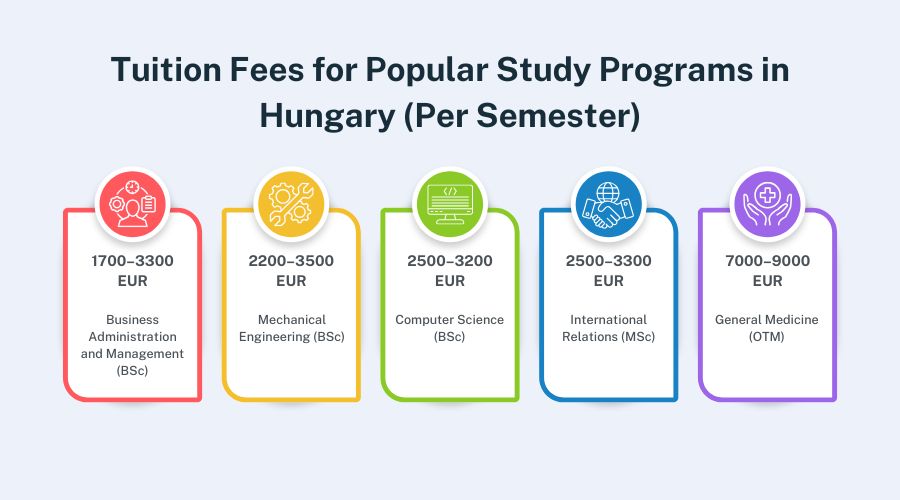
While tuition fees vary based on the institution and program, they remain highly competitive. For instance:

  • Undergraduate programs range from €2,000–€7,000 per year.
  • Master’s programs cost between €3,000–€8,000 per year.

Hungary also offers numerous scholarships for international students, including the prestigious Stipendium Hungaricum. This scholarship covers full tuition, accommodation, health insurance, and a monthly stipend, making it an excellent opportunity for eligible students.

Funding Options for International Students

Student Loans
For self-financed students, Hungary’s Student Loan Centre offers loans with favorable interest rates. To qualify, students must:

  • Be under 45 years of age.
  • Have a valid student status in Hungary.
  • Meet residency and legal requirements.

Repayment is income-based, beginning only after graduation, ensuring manageable financial commitments.

Student Jobs
International students can work up to:

  • 30 hours per week during term time.
  • 66 working days during breaks.

The minimum monthly wage is approximately €445 for unskilled jobs and €550 for skilled positions, providing additional financial support for living expenses.

What Makes Hungary Unique?

  • Affordable Living: Students can comfortably manage their expenses with an average monthly budget of €500–€700.
  • Rich Cultural Experience: Hungary’s history, architecture, and vibrant student life create an enriching environment for learning and personal growth.
  • Global Recognition: Degrees from Hungarian universities are internationally recognized, opening doors to exciting career opportunities worldwide.

Conclusion

Hungary is the perfect destination for students seeking affordable, high-quality education in a culturally rich and welcoming environment. From renowned universities like the University of Pécs and the University of Szeged to accessible funding options, Hungary ensures that your academic journey is both financially sustainable and academically rewarding.

Are you ready to take the first step towards a brighter future? Explore the opportunities Hungary has to offer and make your dream of studying abroad a reality!
Read More

December 1, 2024

North Macedonia, a small yet dynamic country in the heart of the Balkans, is becoming an increasingly attractive destination for immigrants. Known for its stunning landscapes, rich cultural heritage, and growing economy, North Macedonia offers numerous opportunities for individuals seeking a fresh start in Europe. With its low cost of living and friendly immigration policies, the country provides a promising environment for workers, students, investors, and families.

Why Choose North Macedonia?

  1. Affordable Living:
    North Macedonia is one of the most budget-friendly countries in Europe, offering affordable housing, food, transportation, and education.
  2. Strategic Location:
    Situated at the crossroads of Europe, North Macedonia provides easy access to neighboring countries like Greece, Albania, Bulgaria, and Serbia.
  3. Economic Growth:
    Key sectors such as agriculture, renewable energy, IT, and tourism are growing, creating demand for skilled professionals.
  4. Cultural Richness:
    The country offers a unique blend of history, cuisine, and natural beauty, making it a great place for those seeking an enriching lifestyle.
  5. Pathway to EU Integration:
    While not yet a member of the European Union, North Macedonia is working toward EU accession, making it a promising destination for long-term settlement.

Immigration Pathways to North Macedonia in 2025

  1. Work Visa:
    • Designed for skilled professionals with job offers from Macedonian employers.
    • High-demand sectors include IT, healthcare, construction, and education.
    • Requirements:
      • Job offer or employment contract.
      • Valid passport.
      • Proof of qualifications.
      • Health insurance.
  2. Investment Visa:
    • For entrepreneurs and investors interested in contributing to the Macedonian economy.
    • Minimum investment varies by sector, starting at €20,000 for small businesses.
    • Requirements:
      • Business plan.
      • Proof of financial resources.
      • Clean criminal record.
  3. Study Visa:
    • North Macedonia is home to several universities offering English-taught programs at affordable tuition rates.
    • Requirements:
      • Admission letter from a recognized institution.
      • Proof of financial means.
      • Health insurance.
  4. Family Reunification Visa:
    • Enables family members to join Macedonian residents or citizens.
    • Requirements:
      • Proof of relationship (marriage or birth certificate).
      • Financial support documentation.
  5. Permanent Residency and Citizenship:
    • Permanent residency can be obtained after 5 years of legal stay.
    • Citizenship is available after 8 years, with fast-tracking for spouses of Macedonian citizens or significant investors.

Costs Associated with Immigration(Approximate)

Visa Type Application Fee Processing Time
Work Visa €50–€100 1–2 months
Investment Visa €100–€200 2–4 months
Study Visa €50–€100 1–2 months
Family Reunification €50–€100 2–3 months
Permanent Residency €200–€300 3–6 months

Additional costs include document translations, health insurance, and registration fees for businesses (if applicable).

How to Succeed in North Macedonia

  1. Learn the Language:
    While English is commonly spoken in urban areas, learning Macedonian or Albanian can greatly enhance your integration and job prospects.
  2. Understand Legal Obligations:
    • Register your residence within 48 hours of arriving in the country.
    • Ensure compliance with visa requirements and renewal deadlines.
  3. Build a Network:
    Join expatriate groups and engage with locals to establish a support system and explore opportunities.
  4. Leverage Economic Opportunities:
    Research growing industries like IT, renewable energy, and tourism to align your skills or business ideas with market demands.
  5. Adapt to Local Culture:
    Embrace the country’s traditions, festivals, and cuisine to enrich your experience and foster goodwill with the community.

Living in North Macedonia: What to Expect

  • Housing: Affordable apartments are readily available, especially in cities like Skopje, Ohrid, and Bitola.
  • Healthcare: Access to public and private healthcare systems at reasonable costs.
  • Education: High-quality education with increasing international collaboration in universities.
  • Transport: Public transportation is efficient, and driving is relatively affordable.


Conclusion

North Macedonia in 2025 is a land of opportunity for immigrants seeking affordable living, career growth, and cultural richness. Whether you’re a skilled worker, student, investor, or family member, the country offers a supportive environment to build your future.

With its strategic location, growing economy, and welcoming policies, now is the perfect time to consider North Macedonia as your next destination. Your new beginning awaits!
Read More