


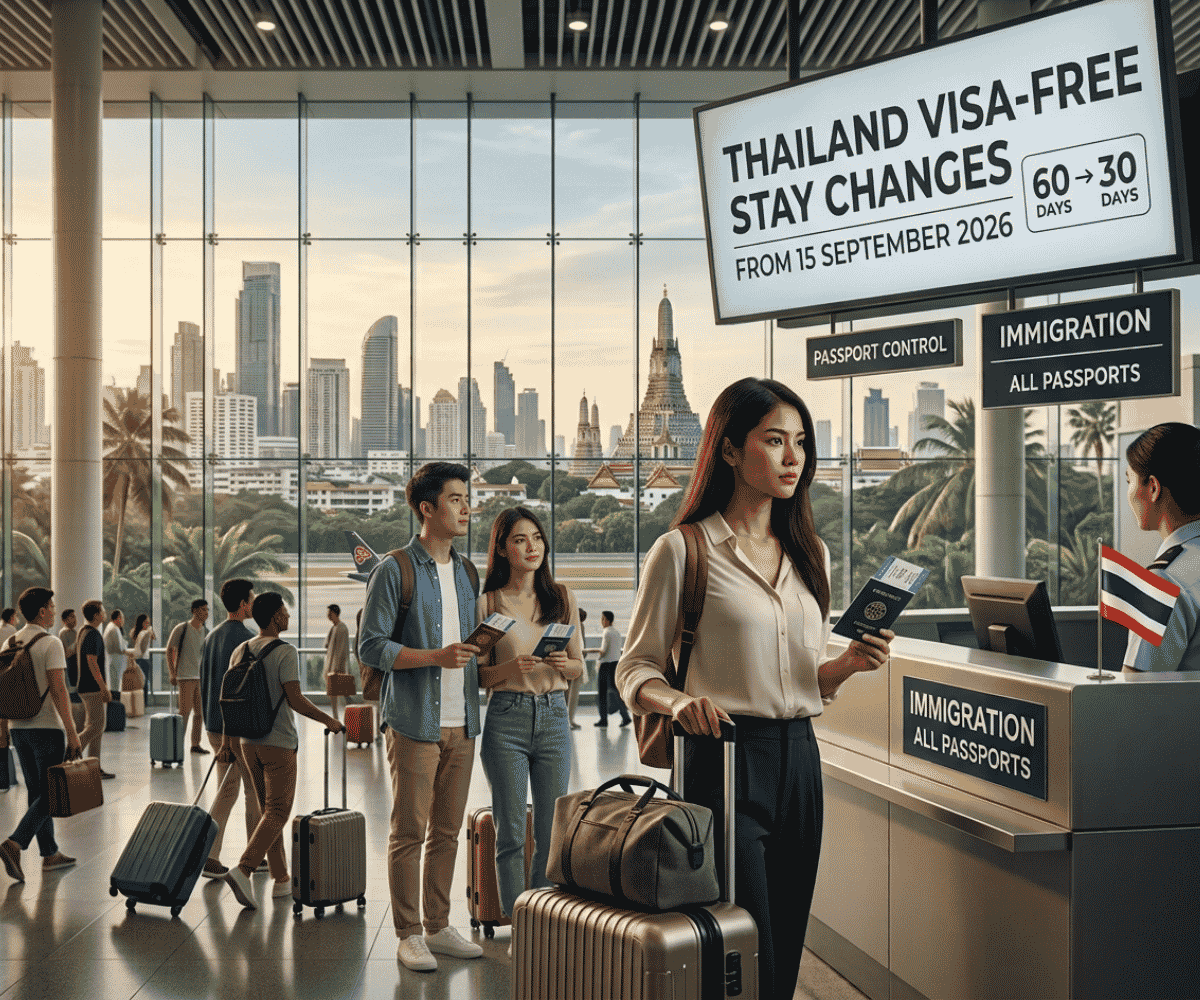
Thailand is introducing a major change to its visa-free entry policy, and travelers planning to visit the country after September 15, 2026 should understand what the new rules mean before making their travel arrangements.
For the past two years, eligible travelers from 93 countries and territories have generally been able to enter Thailand without a visa and stay for up to 60 days. That arrangement is now being revised. From September 15, Thailand will move to a new visa-exemption structure in which eligible nationals from 60 countries and territories will generally receive a 30-day visa-free stay.
The change does not mean Thailand is ending visa-free travel. Instead, the government is restructuring the system, reducing the standard visa-exempt stay for many travelers and introducing different categories based on nationality.
For tourists planning a short holiday, the change may not have much impact. However, people planning longer stays, repeated visits or land-border crossings will need to pay much closer attention to the new requirements.
What Is Changing From September 15, 2026?
The biggest change is the reduction of the previous 60-day visa exemption to 30 days for eligible travelers under the new system.
Thailand’s revised framework is designed to create clearer categories for foreign visitors rather than applying the same 60-day exemption broadly to 93 countries and territories.
Under the new arrangements, travelers will generally fall into different categories depending on their nationality, including:
- 30-day visa exemption for eligible nationals from 60 countries and territories
- 15-day visa exemption for Mauritius and Seychelles
- Visa on Arrival for Azerbaijan, Belarus and Serbia
- Separate bilateral arrangements may continue to provide different entry conditions for certain nationalities
This means travelers should no longer depend on older information stating that their passport automatically qualifies for a 60-day visa-free stay.
The 60-Day Visa-Free Stay Is Being Reduced to 30 Days
For travelers who have become accustomed to Thailand’s 60-day visa exemption, this is the most significant change.
Under the previous system, eligible visitors could enter Thailand without obtaining a visa beforehand and receive up to 60 days for tourism. From September 15, eligible nationals included in the new 30-day category will instead receive a maximum visa-exempt stay of 30 days.
For a normal vacation, this may not create any difficulty. Someone visiting Bangkok, Phuket, Chiang Mai, Pattaya or Thailand’s islands for one or two weeks will still be comfortably within the new limit.
The situation is different for travelers planning an extended trip.
For example, someone planning to spend 45 or 50 days in Thailand can no longer simply assume that the previous 60-day visa-free arrangement will cover the entire trip. They will need to investigate whether they can obtain an extension or whether another Thai visa is more appropriate for their circumstances.
Why Is Thailand Changing Its Visa Policy?
Thailand’s government has explained that the revision is intended to improve the country’s visa and immigration framework while continuing to facilitate legitimate tourism.
The previous 60-day visa-exemption system covered a large number of countries. Thai authorities have expressed concerns that the broad arrangement could be used for purposes beyond ordinary tourism, including repeated entries or activities that should properly be covered by another type of visa.
The revised system therefore introduces greater differentiation between nationalities and entry categories.
Thailand is also continuing to strengthen its immigration screening and traveler information systems. The Thailand Digital Arrival Card (TDAC) is part of this broader effort to improve information collection and screening for international arrivals.
The overall direction is not toward closing Thailand to international visitors. Rather, the country is attempting to maintain tourism accessibility while giving immigration authorities greater control over how visa-exempt entry is used.
New Rules for Land-Border Entries
Another important part of the changes concerns travelers who enter Thailand through land borders.
Under the revised visa-exemption framework, eligible travelers will generally be limited to two visa-exempt land-border entries per calendar year, although specific exceptions apply to certain nationalities and circumstances.
This could have a significant impact on frequent travelers who regularly leave Thailand and return through neighboring countries.
Travelers should therefore be particularly careful if their plans involve multiple border crossings. A previous pattern of leaving Thailand and returning under visa exemption should not automatically be assumed to remain possible under the new system.
Thailand Is Introducing a 15-Day Visa-Exemption Category
Thailand is also creating a separate 15-day visa-exemption category.
Citizens of Mauritius and Seychelles will be able to enter Thailand under this category for tourism for up to 15 days.
This demonstrates an important feature of the new system: Thailand will no longer have one uniform visa-free period covering all participating nationalities.
Instead, the length and type of visa-free access will depend on the traveler’s passport and the category under which they enter the country.
What Is Happening to Visa on Arrival?
Thailand is also revising its Visa on Arrival arrangements.
Under the new framework, Azerbaijan, Belarus and Serbia are included in the Visa on Arrival category. Meanwhile, India is being moved into the 30-day visa-exemption category rather than remaining under the previous Visa on Arrival arrangement.
This is why travelers should always check the rules for their specific nationality and passport rather than relying on general statements such as “Thailand is visa-free.”
Visa policies can change, and information published before September 15 may not accurately describe the rules that apply after the new system comes into effect.
What Happens If You Are Already in Thailand?
Travelers who are already in Thailand before the new measures take effect should not assume that their existing permission to stay will suddenly disappear.
Those admitted under the previous rules before the new system comes into force can generally remain according to the period of stay granted to them at the time of entry.
In other words, the September 15 change primarily affects the new entry arrangements, rather than automatically cancelling a stay that immigration authorities have already granted.
However, every traveler should follow the exact date stamped or otherwise recorded by Thai immigration and make sure they leave or obtain the appropriate extension before their permitted stay expires.
What Does This Mean for Tourists?
The practical impact will depend on how long you intend to stay in Thailand.
For travelers taking a short holiday, the new system may barely change their plans. A 7-, 14-, 21- or even 25-day trip can generally fit within a 30-day visa-exempt period if the traveler qualifies for that category.
The change becomes much more important for longer trips.
For example:
- 10-day holiday: Generally well within the new 30-day period.
- 25-day holiday: Still within the 30-day period for eligible travelers.
- 45-day holiday: Requires planning beyond the standard 30-day visa exemption.
- Frequent land-border crossings: Additional restrictions may apply.
The key point is that travelers should plan according to the new permitted period, rather than relying on Thailand’s previous 60-day policy.
What Should Travelers Do Before Traveling?
If Thailand is on your travel list for late 2026, it is worth reviewing your plans before booking flights and accommodation.
Here are the most important things to check:
- Confirm whether your passport nationality qualifies for visa-free entry.
- Check the exact number of days you are permitted to stay.
- If your trip is longer than the visa-exempt period, investigate the appropriate visa or extension option.
- Check the rules if you intend to enter through a land border.
- Make sure you meet Thailand’s current arrival and immigration requirements.
- Recheck the official requirements shortly before departure because immigration policies can change.
What About Bangladeshi Travelers?
Bangladeshi travelers should pay particular attention to this update.
The introduction of a 30-day visa exemption does not mean that every nationality can now enter Thailand without a visa for 30 days. The exemption applies only to the countries and territories specifically included in the relevant category.
Therefore, Bangladeshi passport holders should not assume that they qualify for the new 30-day visa-free arrangement simply because citizens of some other Asian countries do.
Before booking a Thailand trip, Bangladeshi travelers should verify the current visa requirements applicable specifically to Bangladeshi passport holders and follow the latest instructions from the relevant Thai authorities.
This is especially important because social-media posts and older travel articles may continue to circulate outdated information about Thailand’s previous 60-day visa-free policy.
Why This Update Matters
Thailand remains one of the world’s most popular destinations for international tourism, and the country is not abandoning visa-free travel.
However, the September 15, 2026 change marks an important shift in how Thailand manages visa-exempt visitors.
The previous system offered a relatively generous 60-day stay across 93 countries and territories. The new framework is more selective, with a 30-day category for eligible nationals from 60 countries and territories, a separate 15-day category for Mauritius and Seychelles, and revised Visa on Arrival arrangements.
For ordinary tourists, the biggest lesson is simple: visa-free does not mean unlimited or automatically 60 days anymore.
Conclusion
Thailand’s new visa-free entry rules represent an important change for international travelers planning trips from September 15, 2026 onward. While Thailand will continue to welcome eligible visitors without requiring a visa in advance, the previous 60-day exemption is being replaced by a more structured system, with 30 days becoming the standard visa-exempt stay for eligible nationals in the new 60-country category.
For travelers taking short holidays, this change may have little practical effect. But for those planning extended stays, repeated visits or land-border crossings, understanding the new rules will be essential to avoid unexpected immigration problems.
The most important thing travelers can do is check the rules that apply specifically to their passport before traveling. Do not rely on outdated articles, social-media posts or the previous 60-day policy.
If Thailand is part of your 2026 travel plans, check your permitted stay carefully, prepare the correct documents, and make sure your itinerary matches the latest immigration requirements. A little preparation before departure can help ensure a smoother and more stress-free journey.