
Loading...
Hi, How Can We Help You?

Category Archives: Immigration Visa

October 20, 2025

The United Kingdom has announced a major update to its immigration rules by raising the English-language requirement for many visa categories. This change is part of the government’s long-term plan to strengthen integration, improve workplace communication, and ensure that newcomers can participate more effectively in UK society. While the policy is aimed at improving outcomes, it also creates new challenges for applicants who are planning to work, study, or settle in the country.

What Has Changed?

Until now, many UK visa categories — especially work-related routes — accepted English proficiency at the B1 level. Under the new rules, the required level will increase to B2 for a significant number of applicants. This means that applicants will need stronger listening, speaking, reading, and writing skills than before.

In addition to main applicants, adult dependants will now also face English requirements. Those joining family members in the UK will be required to show a basic level of English at the time of entry, and gradually meet higher standards when extending their visa or applying for settlement.

What Is the Difference Between B1 and B2?

To understand the impact, it helps to break down the language levels:

Level Meaning Skill Expectation
B1 – Intermediate Can handle everyday communication and familiar topics Suitable for basic work and social situations
B2 – Upper-Intermediate Can understand complex ideas and interact fluently Suitable for professional environments and deeper communication

The jump from B1 to B2 is significant. A B2 speaker must be able to express opinions, explain ideas clearly, interact confidently with native speakers, and understand more advanced language in the workplace.

Who Will Be Affected?

The new English-language rules will apply to:

  • Skilled Worker Visa applicants

  • Other professional or work-based visa routes

  • Adult dependants of workers and students

  • Applicants aiming for long-term residence or settlement

Anyone planning a UK immigration pathway that leads to employment or permanent settlement should be prepared for a higher language standard.

Implications for Applicants & Employers

This policy shift has direct consequences for both migrants and UK employers.

For Applicants:
Immigrants will need more preparation before applying, as the bar for acceptable English has been raised. Some candidates may need additional language training or may have to sit for their exams multiple times. The process might become more time-consuming and costly, but meeting the standard will improve communication confidence and workplace readiness once in the UK.

For Employers:
UK companies hiring from abroad must now ensure that international candidates meet the new language criteria before sponsorship. While this adds an extra layer of screening, it also ensures that future employees will require less language support and will integrate more smoothly into professional environments. Employers may face a slightly reduced talent pool but potentially gain stronger long-term hires with better communication skills.

Why Is the UK Making This Change?

The UK government says the higher English requirement is intended to:

  • Support better integration into British society

  • Improve communication in the workplace

  • Reduce pressure on public services

  • Encourage migrants who are ready for long-term contribution and settlement

In short, the government wants newcomers who can adapt quickly, work confidently, and fully participate in community life.

What Does This Mean for Applicants?

For many people, this change means extra preparation and planning. Meeting the B2 requirement may require:

  • More intensive English study

  • Longer preparation time before applying

  • Additional test attempts if a first attempt falls short

Applicants will need to prove their English level through an approved test or an accepted educational qualification taught in English.

If you plan to bring your family, remember that adult dependants will also need to prepare, which may affect your application timeline.

Tips for Future UK Visa Applicants

If you are planning to apply under a UK work or settlement route, here are some smart steps to take now:

  1. Assess your current English level — Find out whether you are closer to B1 or B2.

  2. Start improving early — Don’t wait until the application stage to begin preparing.

  3. Practice all four skills — Focus on speaking and writing, as these are where most applicants struggle.

  4. Plan for dependants — If you are bringing a spouse or adult family member, ensure they begin learning early.

  5. Apply sooner if eligible — If you meet current rules, consider whether early application benefits you before the changes take effect.

Conclusion

The UK’s move to raise English-language requirements marks a major shift in its immigration system. While it raises the bar for applicants, it also reflects the country’s expectation that migrants will contribute actively to society and the workplace. With proper preparation and early planning, applicants can still achieve their UK goals — but waiting until the last moment could lead to delays, setbacks, or missed opportunities.

If you or your dependants are planning to apply for a UK visa, now is the time to prepare, improve your English skills, and review your application strategy. A well-planned approach today will save time, stress, and cost in the future.


Read More

September 22, 2025

The United States has long been a top destination for skilled professionals from around the world, especially through the H-1B visa program. But with the Trump administration’s latest move, the landscape for employers and international talent may be changing dramatically. A new policy introduces a $100,000 fee for companies sponsoring certain skilled worker visa applicants. This shift could reshape hiring strategies, impact global talent flows, and raise important questions about the future of U.S. immigration.

What’s Changing

Under the new rule, employers who file new H-1B petitions for workers outside the United States will be required to pay an additional $100,000 fee.

Key points to note:

  • The fee applies to new applications, not renewals.

  • Skilled workers already in the U.S. on H-1B visas are not directly affected.

  • The policy took effect in September 2025.

  • Employers must prove payment as part of the petition process.

This is on top of existing filing fees, making the cost of sponsoring skilled workers significantly higher.

Why the Change?

The stated goal is to:

  • Protect U.S. jobs by making it more expensive to hire foreign talent.

  • Reduce alleged “abuse” of the H-1B system by outsourcing firms.

  • Encourage higher wages and investment in American workers.

Supporters see this as a way to prioritize U.S. workers, while critics argue it could harm innovation and competitiveness.

Impact on Employers

For businesses, this policy is a game changer.

  • Higher Costs: What used to cost a few thousand dollars now requires a six-figure investment.

  • Strategic Hiring: Companies may reserve H-1B sponsorships for only the most critical, senior, or highly specialized roles.

  • Startups & Small Firms: Smaller businesses will feel the burden most, as many cannot afford the added cost.

  • Global Competition: Employers may consider shifting jobs overseas or relying more on remote work solutions.

Impact on Skilled Workers

For international professionals seeking opportunities in the U.S., the picture is mixed.

  • Fewer Opportunities: Companies may cut back on sponsoring foreign workers.

  • Selective Hiring: H-1Bs may go primarily to top-tier talent where the fee can be justified.

  • Increased Uncertainty: Visa sponsorship could become harder to secure, especially for entry-level or less specialized roles.

  • Alternative Routes: Applicants may need to explore other visa categories or consider destinations outside the U.S.

Pros and Cons

Pros

  • Encourages higher wages for U.S. workers.

  • Reduces misuse of the H-1B system.

  • Directs H-1B visas toward truly specialized positions.

Cons

  • Creates barriers for global talent.

  • Puts heavy financial strain on smaller businesses.

  • Risks pushing jobs and innovation outside the U.S.

What Employers and Applicants Should Do

  1. Review pending and future petitions to determine if the new fee applies.

  2. Plan budgets accordingly, especially if hiring from abroad.

  3. Consult with immigration experts to explore alternative visa pathways.

  4. Communicate with prospective hires about costs, timelines, and expectations.

  5. Stay updated, as policies may evolve with legal challenges or future adjustments.

Conclusion

The $100,000 fee for skilled worker visa applications marks a major shift in U.S. immigration policy. While designed to protect American workers, it also places new burdens on global businesses and international professionals. For employers, the challenge is balancing cost with the need for top talent. For skilled workers, the challenge is navigating a tougher path to opportunities in the U.S.

Read More

July 14, 2025

Canada is known for its openness, multiculturalism, and traveler-friendly policies. In recent years, the Canadian government has taken steps to simplify entry procedures for select international travelers through visa waivers or Electronic Travel Authorization (eTA). As of 2025, travelers from several Asian countries can now visit Canada visa-free or with an eTA, making travel more accessible for tourism, short business trips, or visiting family.

In this blog, we explore the 10 Asian countries that currently benefit from visa-free access or simplified eTA entry to Canada, who qualifies, and what travelers need to know before they pack their bags.

What Is Visa-Free or eTA Travel to Canada?

Before we dive into the list, let’s clarify what visa-free travel means.

  • Visa-free: You do not need a visa to enter Canada if you meet specific conditions.

  • eTA (Electronic Travel Authorization): A quick, online travel permit required for visa-exempt nationals arriving by air.

For many Asian travelers, Canada offers visa-free travel if they have previously held a Canadian visa or currently hold a valid U.S. non-immigrant visa. These travelers can apply for an eTA instead of a full visa, saving both time and money.

10 Asian Countries Eligible for Visa-Free or eTA Entry to Canada (2025)

Here’s a list of countries whose nationals may travel to Canada visa-free or under the eTA system, subject to conditions.

1. Philippines
  • Eligible for eTA if the traveler held a Canadian visa in the last 10 years or currently holds a valid U.S. non-immigrant visa.

  • eTA is required for air travel.

2. Thailand
  • Thai nationals can apply for eTA if they meet the same criteria: past Canadian visa or current U.S. visa.

3. Indonesia
  • Indonesian travelers benefit from the eTA program under the same visa history conditions.

4. Vietnam
  • Citizens of Vietnam are eligible for an eTA under Canada’s expanded travel facilitation initiative (with valid travel history).

5. Malaysia
  • Malaysian passport holders who meet the criteria can now apply for an eTA to visit Canada.

6. India
  • Indian citizens with a valid U.S. visa or Canadian visa issued in the last 10 years can travel using an eTA.

  • Not visa-free for all Indian passport holders — must meet travel history conditions.

7. Taiwan
  • Taiwanese passport holders with a personal identification number (PIN) on their passport are already visa-exempt for short visits.

  • Still require eTA when flying to Canada.

8. South Korea
  • South Korean citizens do not need a visa and only need to apply for an eTA.

  • Considered a fully visa-exempt country.

9. Singapore
  • Singaporean passport holders enjoy visa-free access to Canada for short stays.

  • Only an eTA is needed when traveling by air.

10. Japan
  • Japan is a long-standing visa-exempt country.

  • Travelers need an eTA if arriving by air, but no visa is required for visits under 6 months.

Benefits of Visa-Free or eTA Entry

  • No embassy visits or interviews

  • Lower application costs (eTA costs only 7 CAD)

  • Faster approvals, usually within minutes to a few hours

  • Greater travel flexibility for students, businesspeople, and families

  • Improved tourism and cultural exchange with Canada

Eligibility Criteria: Do You Qualify?

To qualify for an eTA instead of a visa, you usually must:

✅ Be a citizen of one of the listed countries
✅ Have held a Canadian visa in the last 10 years or currently hold a valid U.S. non-immigrant visa
✅ Travel to Canada by air (eTA is not valid for land or sea entry)
✅ Have a valid biometric passport

👉 Check your eligibility on the official Canadian immigration site or consult with a visa expert like SchoolingVisa.

How to Apply for an eTA

  1. Visit the official Government of Canada eTA site

  2. Complete the online application

  3. Pay the CAD 7 fee

  4. Wait for approval (usually minutes to 72 hours)

  5. Get your eTA linked to your passport

Travel Tips for Visa-Free Visitors to Canada

  • Keep your return ticket & travel plans handy for immigration questioning

  • Get travel insurance for medical emergencies

  • Ensure your passport is valid for at least 6 months

  • Don’t overstay — eTA allows visits up to 6 months only

  • Avoid working or studying without the proper permits

Final Thoughts: A New Era for Asian Travelers to Canada

This expansion of visa-free or eTA eligibility reflects Canada’s commitment to building stronger ties with Asian countries. Whether you’re visiting Niagara Falls, studying in Toronto, or exploring Vancouver’s vibrant neighborhoods, the journey has never been easier.

If you’re unsure whether you qualify, or want help with your study permit, work visa, or visitor visa, the experts at  GlobalVisaNet are here to help you navigate every step.

Read More

February 27, 2025

On February 18, 2025, the Saskatchewan Immigrant Nominee Program (SINP) announced a temporary suspension of new Job Approval Forms (JAFs) submissions. This decision comes in response to the federal government’s move to reduce provincial nomination allocations by 50% for the year 2025.

Understanding the SINP and JAFs

The SINP serves as a crucial pathway for foreign workers aiming to secure permanent residency in Saskatchewan. Employers intending to hire international talent must first submit a JAF to obtain a Job Approval Letter (JAL). This letter enables the prospective employee to apply for provincial nomination, setting them on the path to permanent residency. With the current pause on JAF submissions, new employer-supported applications are temporarily on hold.

Reasons Behind the Suspension

The federal government’s Immigration Levels Plan for 2025-2027 has significantly reduced overall immigration numbers, including a 50% cut to the Provincial Nominee Program (PNP) allocations. This reduction has directly impacted Saskatchewan’s ability to nominate candidates, prompting the SINP to reassess and adjust its processes accordingly.

Implications for Employers and Foreign Workers

The suspension of JAF submissions presents challenges for both employers and prospective immigrants:

  • Employers: Businesses relying on the SINP to address labor shortages will need to explore alternative avenues for hiring foreign talent. Options include the Temporary Foreign Worker Program (TFWP), which necessitates obtaining a Labour Market Impact Assessment (LMIA), or leveraging the federal Express Entry system.

  • Foreign Workers: Individuals seeking permanent residency through employer sponsorship in Saskatchewan may experience delays. It’s advisable for these candidates to consider other immigration pathways, such as direct applications through the Express Entry system or exploring opportunities in other provinces.

Duration and Future Outlook

The SINP has indicated that this pause is temporary, expected to last several weeks. During this period, the program will review existing applications and implement necessary adjustments to align with the reduced nomination allocations. No specific date has been provided for when JAF submissions will resume. Stakeholders are encouraged to stay informed through official SINP communications for updates on the situation.

Conclusion

The temporary suspension of JAF submissions by the SINP reflects broader changes in Canada’s immigration landscape. Both employers and foreign workers are urged to explore alternative pathways and stay abreast of updates to navigate this transitional period effectively.

Read More

December 12, 2024
December 12, 2024

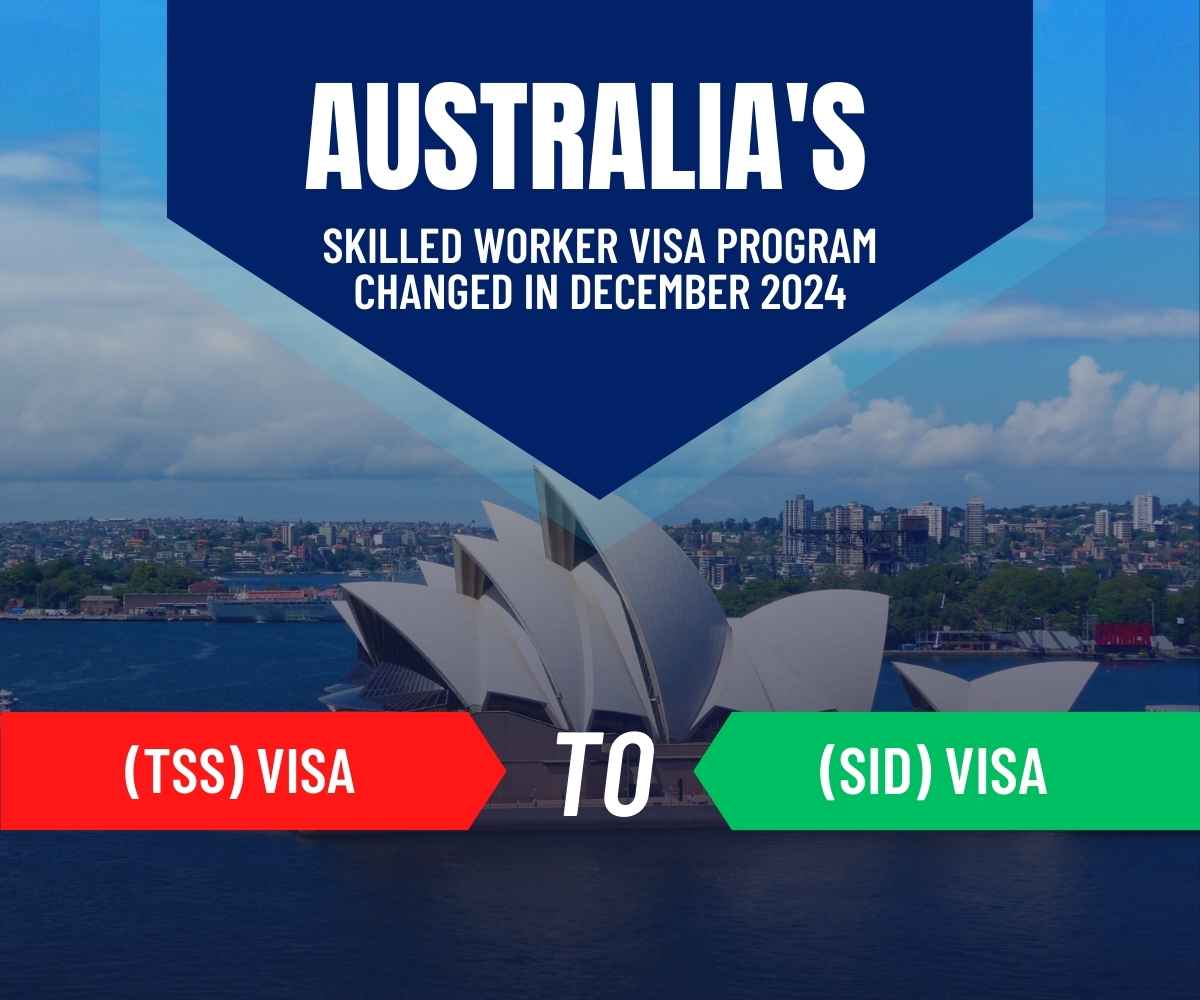
Australia is taking bold steps to reshape its skilled migration program with the introduction of the Skills in Demand (SID) visa (subclass 482). This new visa, set to replace the Temporary Skill Shortage (TSS) visa on December 7, 2024, is designed to streamline processes, expand pathways to permanent residency, and attract highly skilled professionals to meet the country’s workforce needs.

Key Changes:

  1. Core Skills Occupation List (CSOL):
    • The new visa introduces the CSOL, which replaces the previous occupation lists. It simplifies eligible occupations and provides access to both temporary and permanent residency pathways for 456 occupations.
  2. Streams Under the SID Visa:
    • Core Skills Stream: Requires occupations to be on the CSOL.
    • Specialist Skills Stream: Targets high-income earners (minimum $135,000 annually) in any occupation except trades, machinery operation, and labor.
    • Labour Agreement Stream: Retains the same structure as under the TSS visa, requiring specific agreements between employers and the government.
  3. Work Experience Requirements:
    • Reduced from 2 years to 1 year of relevant work experience, making the visa more accessible.
  4. Pathways to Permanent Residency:
    • More defined and expanded for eligible visa holders across streams.
  5. Eligibility and Salary Adjustments:
    • Annual indexation of salary thresholds (currently $73,150) applies. Sponsorship for some streams may require higher salaries depending on the occupation and stream.

Why the Change?

The transition from the TSS visa to the SID visa reflects Australia’s commitment to addressing skills shortages more effectively while simplifying migration processes. With the global competition for talent intensifying, these changes are intended to:

  • Attract top-tier professionals in high-demand sectors.
  • Ensure fairer and more transparent eligibility criteria.
  • Provide greater flexibility to industries and employers.

Comparison Between SID and TSS

Here’s a side-by-side comparison of the Skills in Demand (SID) visa (subclass 482) and the Temporary Skill Shortage (TSS) visa based on the latest updates:

Aspect Skills in Demand (SID) Visa Temporary Skill Shortage (TSS) Visa
Implementation Date Effective from December 7, 2024. Introduced in March 2018; being replaced by the SID visa.
Purpose Targets occupations with demonstrated demand, addressing critical shortages and simplifying pathways. Designed to address skill shortages temporarily for Australian employers.
Visa Structure Three-tier system: Specialist Skills, Core Skills, and Essential Skills pathways based on earnings and skills. Short-Term, Medium-Term, and Labor Agreement streams, with pathways tied to specific occupation lists.
Occupation Lists Consolidated Core Skills Occupation List (CSOL) applicable across tiers. Separate Short-Term Skilled Occupation List (STSOL) and Medium and Long-Term Strategic Skills List (MLTSSL).
Pathways to Permanent Residency Offers a more direct pathway to PR for Core and Specialist Skills pathways. PR available only for Medium-Term stream and certain agreements.
Minimum Salary Threshold Earnings determine eligibility under specific tiers (e.g., Core Skills AUD 70,000–135,000). No explicit salary threshold, but market salary rate applies for most streams.
Processing Priority Prioritizes critical and highly skilled roles under the Specialist Skills tier. Priority depends on occupation type and stream.
Skills Assessment Simplified skills assessment tailored to CSOL requirements. Skills assessment varies by occupation and is often more complex.
Duration of Stay Likely flexible and based on tier, with pathways to PR ensuring long-term solutions. Short-Term: up to 2 years; Medium-Term: up to 4 years; renewable.
Program Goals Focuses on innovation and long-term solutions to Australia’s workforce needs. Primarily aimed at filling immediate skill shortages temporarily.
Key Takeaways:
  • The SID visa offers a more streamlined approach by consolidating occupation lists and introducing flexible salary thresholds tied to skill levels.
  • Pathways to Permanent Residency are more accessible under the new framework.
  • The TSS visa had a more fragmented structure and was designed as a short-term solution, whereas the SID visa targets sustainable workforce planning.

Transitional Arrangements

Current TSS visa holders will not be affected by this change, but new applications under the TSS visa will cease once the SID visa is introduced. Employers and applicants are advised to stay informed and consult immigration professionals to navigate this transition.

How to Prepare for the SID Visa

If you’re a skilled worker or employer planning to utilize the SID visa, here are some steps to get started:

  1. Check the CSOL: Ensure your occupation is included in the list.
  2. Understand the Streams: Determine which stream aligns with your qualifications, salary, and work experience.
  3. Consult Experts: Seek professional advice to prepare your application and understand the latest requirements.
  4. Monitor Updates: Stay updated on developments from the Australian Department of Home Affairs.

Conclusion

The Skills in Demand visa marks a significant milestone in Australia’s migration framework. With its simplified structure, enhanced pathways to PR, and focus on high-demand skills, it promises to be a transformative tool for skilled migration. Whether you’re a professional seeking opportunities in Australia or an employer looking to fill critical workforce gaps, the SID visa is poised to open new doors.

Stay tuned for more updates as the December 2024 launch approaches, and take advantage of this exciting new opportunity to build a future in Australia!
Read More

December 1, 2024

North Macedonia, a small yet dynamic country in the heart of the Balkans, is becoming an increasingly attractive destination for immigrants. Known for its stunning landscapes, rich cultural heritage, and growing economy, North Macedonia offers numerous opportunities for individuals seeking a fresh start in Europe. With its low cost of living and friendly immigration policies, the country provides a promising environment for workers, students, investors, and families.

Why Choose North Macedonia?

  1. Affordable Living:
    North Macedonia is one of the most budget-friendly countries in Europe, offering affordable housing, food, transportation, and education.
  2. Strategic Location:
    Situated at the crossroads of Europe, North Macedonia provides easy access to neighboring countries like Greece, Albania, Bulgaria, and Serbia.
  3. Economic Growth:
    Key sectors such as agriculture, renewable energy, IT, and tourism are growing, creating demand for skilled professionals.
  4. Cultural Richness:
    The country offers a unique blend of history, cuisine, and natural beauty, making it a great place for those seeking an enriching lifestyle.
  5. Pathway to EU Integration:
    While not yet a member of the European Union, North Macedonia is working toward EU accession, making it a promising destination for long-term settlement.

Immigration Pathways to North Macedonia in 2025

  1. Work Visa:
    • Designed for skilled professionals with job offers from Macedonian employers.
    • High-demand sectors include IT, healthcare, construction, and education.
    • Requirements:
      • Job offer or employment contract.
      • Valid passport.
      • Proof of qualifications.
      • Health insurance.
  2. Investment Visa:
    • For entrepreneurs and investors interested in contributing to the Macedonian economy.
    • Minimum investment varies by sector, starting at €20,000 for small businesses.
    • Requirements:
      • Business plan.
      • Proof of financial resources.
      • Clean criminal record.
  3. Study Visa:
    • North Macedonia is home to several universities offering English-taught programs at affordable tuition rates.
    • Requirements:
      • Admission letter from a recognized institution.
      • Proof of financial means.
      • Health insurance.
  4. Family Reunification Visa:
    • Enables family members to join Macedonian residents or citizens.
    • Requirements:
      • Proof of relationship (marriage or birth certificate).
      • Financial support documentation.
  5. Permanent Residency and Citizenship:
    • Permanent residency can be obtained after 5 years of legal stay.
    • Citizenship is available after 8 years, with fast-tracking for spouses of Macedonian citizens or significant investors.

Costs Associated with Immigration(Approximate)

Visa Type Application Fee Processing Time
Work Visa €50–€100 1–2 months
Investment Visa €100–€200 2–4 months
Study Visa €50–€100 1–2 months
Family Reunification €50–€100 2–3 months
Permanent Residency €200–€300 3–6 months

Additional costs include document translations, health insurance, and registration fees for businesses (if applicable).

How to Succeed in North Macedonia

  1. Learn the Language:
    While English is commonly spoken in urban areas, learning Macedonian or Albanian can greatly enhance your integration and job prospects.
  2. Understand Legal Obligations:
    • Register your residence within 48 hours of arriving in the country.
    • Ensure compliance with visa requirements and renewal deadlines.
  3. Build a Network:
    Join expatriate groups and engage with locals to establish a support system and explore opportunities.
  4. Leverage Economic Opportunities:
    Research growing industries like IT, renewable energy, and tourism to align your skills or business ideas with market demands.
  5. Adapt to Local Culture:
    Embrace the country’s traditions, festivals, and cuisine to enrich your experience and foster goodwill with the community.

Living in North Macedonia: What to Expect

  • Housing: Affordable apartments are readily available, especially in cities like Skopje, Ohrid, and Bitola.
  • Healthcare: Access to public and private healthcare systems at reasonable costs.
  • Education: High-quality education with increasing international collaboration in universities.
  • Transport: Public transportation is efficient, and driving is relatively affordable.


Conclusion

North Macedonia in 2025 is a land of opportunity for immigrants seeking affordable living, career growth, and cultural richness. Whether you’re a skilled worker, student, investor, or family member, the country offers a supportive environment to build your future.

With its strategic location, growing economy, and welcoming policies, now is the perfect time to consider North Macedonia as your next destination. Your new beginning awaits!
Read More

December 1, 2024

Serbia, a gateway between Eastern and Western Europe, is becoming an increasingly attractive destination for immigrants. With its affordable cost of living, expanding job market, and strategic location, Serbia offers unique opportunities for individuals seeking a fresh start in 2025. Whether you’re looking to work, study, invest, or settle down, Serbia’s welcoming immigration policies are designed to meet the needs of diverse groups.

Why Immigrate to Serbia?

  1. Affordable Living Costs:
    Serbia is one of the most affordable countries in Europe, with low housing, food, and transportation expenses. This makes it a popular choice for families, retirees, and remote workers.
  2. Growing Economy:
    Serbia has been experiencing steady economic growth, especially in technology, agriculture, and manufacturing. The country is attracting foreign investment, which translates to more job opportunities for immigrants.
  3. Strategic Location:
    Situated at the heart of the Balkans, Serbia is well-connected to major European cities. This makes it an ideal base for travel and business.
  4. Quality of Life:
    Serbia offers a vibrant culture, beautiful landscapes, and a mix of urban and rural living. Cities like Belgrade and Novi Sad are cultural hubs, while rural areas provide tranquility.
  5. Path to EU Integration:
    While Serbia is not yet a member of the European Union, it is a candidate country actively working toward accession. This makes it a promising destination for long-term settlement.

Immigration Pathways to Serbia in 2025

  1. Work Visa:
    • Serbia is in need of skilled professionals in IT, healthcare, engineering, and education.
    • Requirements:
      • Job offer from a Serbian employer.
      • Valid passport.
      • Proof of qualifications.
      • Health insurance.
    • Processing Time: Approximately 1–3 months.
  2. Investor Visa:
    • For entrepreneurs and investors who want to start a business or invest in Serbian industries like agriculture, tourism, and real estate.
    • Minimum Investment: Varies by sector, starting from €50,000.
    • Requirements:
      • Business plan.
      • Proof of funds.
      • Criminal background check.
  3. Study Visa:
    • Serbia is home to universities with affordable tuition fees and English-taught programs.
    • Requirements:
      • Admission letter from a Serbian university.
      • Proof of financial resources.
      • Health insurance.
  4. Family Reunification Visa:
    • For family members of Serbian citizens or residents.
    • Requirements:
      • Proof of relationship (marriage certificate, birth certificate).
      • Financial stability of the sponsor.
  5. Digital Nomad Visa (Proposed in 2025):
    • Serbia is working on introducing a visa for remote workers.
    • Expected Requirements:
      • Proof of remote employment or freelance work.
      • Minimum monthly income threshold.
  6. Permanent Residency and Citizenship:
    • Permanent residency can be applied for after five years of continuous stay.
    • Citizenship is possible after eight years, with options for fast-tracking in specific cases (e.g., marriage to a Serbian citizen).

Costs Associated with Serbian Immigration (Approximate)

Visa Type Application Fee Processing Time
Work Visa €50–€150 1–3 months
Investor Visa €150–€300 2–4 months
Study Visa €50–€100 1–2 months
Family Reunification €50–€100 2–3 months
Permanent Residency €200–€300 3–6 months

Additional costs include document translation, health insurance, and proof of financial stability.

Tips for a Successful Immigration Journey

  1. Research Thoroughly:
    Familiarize yourself with visa requirements and ensure your documents meet Serbian standards (translations may be necessary).
  2. Learn the Language:
    While many Serbians speak English, knowing some Serbian can help with integration and enhance job opportunities.
  3. Network and Connect:
    Join local expatriate groups and Serbian communities to build relationships and gain valuable advice.
  4. Plan Your Finances:
    Serbia is affordable, but it’s important to have enough funds to support yourself during the initial months.
  5. Understand Legal Obligations:
    Register your residence within 24 hours of arriving in Serbia (a requirement for all foreigners).

Conclusion

Serbia in 2025 is a land of opportunity for those seeking an affordable yet vibrant lifestyle, career growth, or business potential. With its growing economy, welcoming culture, and strategic location, the country offers a unique blend of modernity and tradition. If you’re looking for a fresh start, now is the time to consider Serbia as your next home.
Read More

December 1, 2024

Germany will need to attract hundreds of thousands of immigrants each year to offset the impact of its ageing population on its workforce, according to a report by the Bertelsmann Foundation. The study highlights the crucial role of immigration in sustaining the economy in the face of demographic change. With an aging population and the large-scale retirement of baby boomers, the country faces an unprecedented workforce shortage. A recent report highlights that Germany needs an average of 288,000 new workers annually until 2040 to stabilize its economy. If participation from women and older workers doesn’t increase significantly, this figure could rise to 368,000 per year.

This challenge, however, opens doors for immigrants seeking better job opportunities, higher wages, and long-term stability. For Germany, attracting skilled workers from abroad is not just an option—it’s essential. For immigrants, this creates a golden opportunity to build prosperous careers and stable futures.

Germany’s Situation: Why Immigrants Are Needed

The German labor market is under strain as baby boomers—those born in the post-war era—are now retiring in large numbers. This demographic shift is shrinking the active workforce, which could result in slower economic growth and strain public services.

Germany’s current job market has over a million unfilled positions, especially in sectors like:

  • Healthcare (nurses, doctors, caregivers).
  • IT and Engineering (software developers, mechanical engineers).
  • Skilled Trades (electricians, plumbers, technicians).
  • Education and Childcare (teachers and early childhood educators).

While the government is promoting higher workforce participation among women and older workers, these measures alone won’t bridge the gap. Immigration has emerged as a vital solution to maintain Germany’s economic strength and sustain its social systems.

How Immigrants Can Benefit from Germany’s Workforce Needs

Germany’s labor shortage isn’t just a challenge—it’s a chance for skilled individuals worldwide to step into high-demand roles and reap the rewards. Here’s how immigrants benefit:

  1. Access to High-Demand Jobs:
    Industries facing critical shortages offer job security and competitive salaries. Professionals like nurses, IT specialists, and engineers have a higher chance of securing employment quickly.
  2. Attractive Salaries and Benefits:
    Employers in Germany are raising wages and offering better benefits to attract foreign talent. This includes housing allowances, relocation assistance, and training programs.
  3. Pathways to Residency and Citizenship:
    Many work visas, such as the EU Blue Card, allow immigrants to apply for permanent residency after a few years. Immigrants can also bring their families, providing them with access to education, healthcare, and employment opportunities.
  4. Cultural and Professional Growth:
    Germany offers immigrants the chance to work in a global, multicultural environment. Access to language courses, professional training, and higher education ensures long-term growth.

Key Visa Options for Immigrants

Germany provides several visa pathways to meet the needs of its labor market:

  1. EU Blue Card:
    • For highly skilled professionals with a job offer in Germany.
    • Minimum salary: €58,400 annually (€45,552 for shortage occupations).
    • Offers residency for up to four years, with a path to permanent residency.
  2. Skilled Worker Visa:
    • For workers with recognized qualifications in sectors experiencing shortages.
    • Requires proof of skills and an employment contract.
  3. Job Seeker Visa:
    • Allows you to stay in Germany for up to six months to search for a job.
    • Requires proof of funds and qualifications.
  4. Self-Employment Visa:
    • For entrepreneurs or freelancers with a viable business plan or sufficient client base.
  5. Family Reunification Visa:
    • Enables family members to join immigrants already living in Germany.

General Requirements for Work Visas

To apply for a visa, you’ll typically need:

  • A valid passport.
  • Proof of qualifications (degrees, certificates).
  • A job offer or employment contract.
  • Health insurance coverage.
  • Proof of financial resources.
  • Completed visa application forms.
  • Language proficiency (varies by visa type)

Steps to Take Advantage of Germany’s Needs

  1. Research Job Opportunities:
    • Focus on high-demand industries like IT, healthcare, or skilled trades.
    • Use platforms like LinkedIn, StepStone, or Monster.de to find job postings.
  2. Prepare Your Application:
    • Gather required documents, including your degree and proof of experience.
    • Ensure your qualifications are recognized in Germany.
  3. Apply for a Visa:
    • Submit your application at the German embassy or consulate in your country.
    • Pay the visa fee (typically €75–€100) and attend an interview if required.
  4. Plan Your Move:
    • Arrange housing, health insurance, and language courses before you arrive.
    • Register your residence in Germany within two weeks of arrival.

Conclusion

Germany’s workforce shortage represents a unique opportunity for immigrants worldwide. While the country faces economic challenges, it’s also welcoming skilled professionals who can contribute to its growth. Immigrants have the chance to secure rewarding jobs, enjoy excellent living standards, and build a future in a country committed to supporting them.

If you’re ready to take the leap, Germany’s doors are open—now is the time to step through them.

Read More